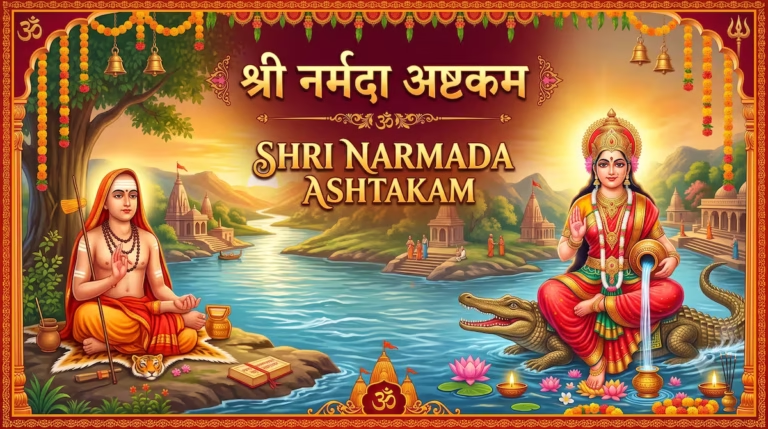
Maa Narmada Birth Story: The Divine Story of Lord Shiva’s Daughter, Reva Maiya
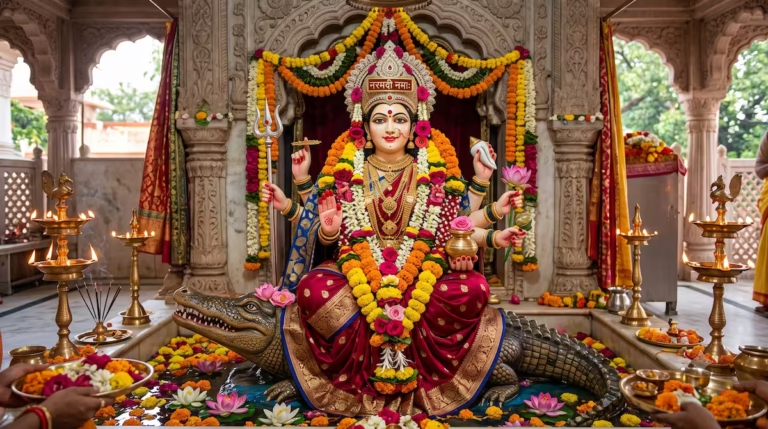
Maa Narmada is one of the holiest rivers in India. Followers of Sanatan Dharma worship her as a divine goddess and lovingly call her Narmada Maiya. Many devotees believe she protects her children and blesses them with peace and spiritual growth. Her sacred origin is closely linked to Lord Shiva. Ancient religious traditions and regional legends preserve several accounts of her birth and descent to Earth.
The Narmada Kund at Amarkantak in Madhya Pradesh is traditionally regarded as the source of the Narmada River. This holy site attracts pilgrims throughout the year. From Amarkantak, the river flows west through central India and finally meets the Arabian Sea. Millions of devotees honor Maa Narmada for her spiritual importance and her role in sustaining life.
The Birth Story of Maa Narmada
The Divine Appearance of Maa Narmada Through Lord Shiva’s Tapasya
Popular Hindu traditions connect the birth of Maa Narmada with Lord Shiva’s divine power and intense penance. One traditional account describes a sacred stream emerging from drops of perspiration from Lord Shiva’s body. This stream represents the divine origin of Maa Narmada in certain regional stories.
Another popular legend describes Maa Narmada as the divine daughter of Lord Shiva. Her beauty and radiant appearance attracted the attention of the gods. Lord Shiva accepted her as his daughter, and devotees began to worship her as Shivputri, meaning the daughter of Lord Shiva.
Different religious traditions preserve different versions of this story. Their details are not identical across all scriptures and local beliefs. Yet these accounts share a common theme. They describe Maa Narmada as a sacred goddess with a close spiritual connection to Lord Shiva.
The Descent of Maa Narmada to Earth
A well-known legend associated with the Narmada Mahatmya mentions King Hiranyateja. According to this traditional story, the king performed intense penance to bring Maa Narmada to Earth. His devotion pleased Lord Shiva, who helped bring about her descent into the earthly realm.
Devotees connect this descent with the welfare of humanity and all living beings. The sacred river has provided water to the mountains, forests, plains, and settlements of central India for centuries. Her waters support agriculture, wildlife, and communities along her banks. Devotees worship Maa Narmada and seek blessings for peace, prosperity, and spiritual well-being.
Why Is Maa Narmada Also Called Reva?
Reva is one of the oldest and most widely known names of Maa Narmada. Traditional interpretations connect this name with the movement and flow of the river. Her waters pass through rocky stretches, hills, and narrow river channels across central India.
In several places, the river flows around large rocks and over uneven riverbeds. These natural features create currents that give the water a lively movement. Religious traditions associate this flowing character with the name Reva.
Devotees use both Narmada Maiya and Reva Maiya as expressions of love and reverence. These names hold a special place in Hindu worship and regional religious culture. They reflect the deep bond between the people of central India and their sacred river.
The Sacred Origin of Maa Narmada: Amarkantak
Amarkantak is a famous pilgrimage destination in Madhya Pradesh. Religious tradition identifies this region as the source of Maa Narmada. The Narmada Kund stands within a sacred temple complex and serves as a major center of worship.
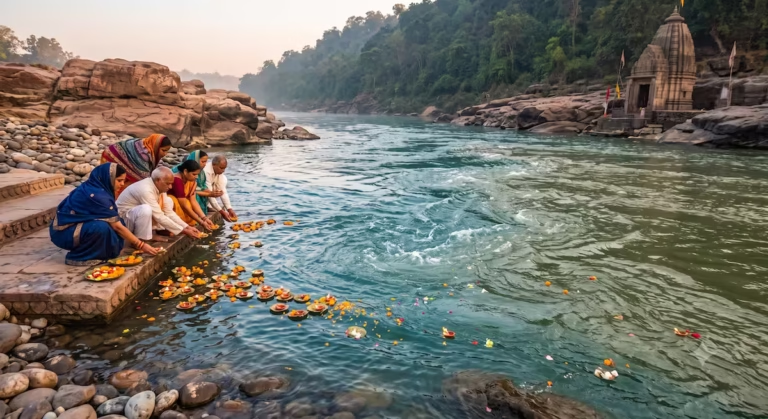
Pilgrims visit the kund to offer prayers and seek the blessings of Maa Narmada. Many devotees perform rituals, offer flowers, and attend religious ceremonies at the temple. The surrounding hills and forests add to the area’s religious importance. Amarkantak remains one of the most respected pilgrimage sites associated with the Narmada River.
The town receives many visitors during Narmada Jayanti and other Hindu festivals. Devotees gather to worship the goddess and celebrate her sacred appearance. For many pilgrims, a visit to Amarkantak marks an important part of their spiritual practice.
The Sacred Relationship Between Maa Narmada and Lord Shiva
The worship of Maa Narmada has a close connection with devotion to Lord Shiva. Special smooth, oval-shaped stones found in the river are worshipped as Narmadeshwar Shiva Lingas or Banalingas. Devotees use these sacred stones for Shiva worship at temples and homes.
A popular saying among devotees expresses this belief:
“Narmada ka har kankar, Shankar.”
This saying means that every stone in the Narmada can be seen as a form of Shankar, another name for Lord Shiva. It reflects the deep faith that connects the river with the worship of Shiva. The tradition has made the Narmada a respected place for devotees who seek sacred Shiva Lingas.
Many pilgrims visit the riverbanks to meditate, chant mantras, and perform daily worship. Some collect sacred stones according to established religious customs. The connection between Maa Narmada and Lord Shiva remains an important part of the region’s spiritual traditions.
When Is Maa Narmada Jayanti Celebrated?
Maa Narmada Jayanti marks the birth or divine appearance of the sacred river goddess. According to the traditional Hindu lunar calendar, the festival falls on Magha Shukla Saptami. This is the seventh day of the bright fortnight in the Hindu month of Magha.
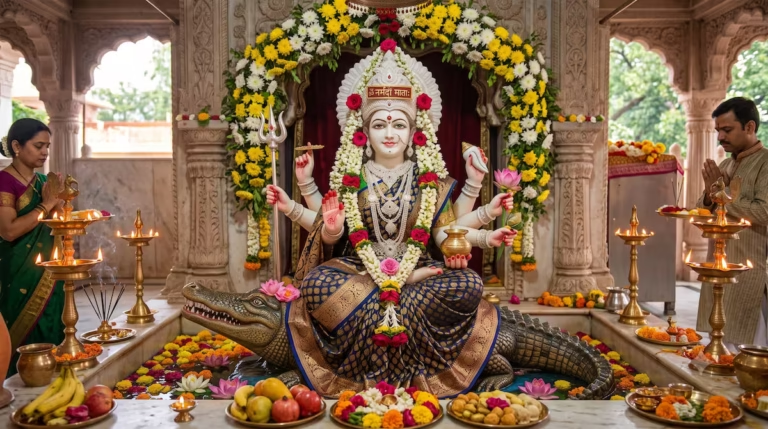
Amarkantak and many other pilgrimage sites along the Narmada host special religious ceremonies on this day. Devotees attend aarti, offer flowers, light lamps, and pray to Maa Narmada. Temples and riverbanks become centers of worship and celebration.
Pilgrims seek blessings for their families, health, and prosperity. Many also pray for the well-being of all living beings. Narmada Jayanti provides an opportunity for devotees to express their gratitude and strengthen their faith in the goddess.
The Spiritual Significance of Maa Narmada
Sanatan Dharma regards Maa Narmada as a sacred river associated with spiritual purification and liberation. Devotees believe that remembering her, offering prayers, and worshipping her bring spiritual benefits. Her religious importance appears in ancient traditions, pilgrimage practices, and devotional literature.
Maa Narmada represents the close relationship between faith, nature, and human life. Her waters support communities and living creatures across a large part of central India. Her worship encourages devotees to respect the river and recognize the value of clean water.
Many people visit her banks for prayer, meditation, and spiritual reflection. Others take part in religious ceremonies or follow traditional pilgrimage practices. For countless devotees, Maa Narmada offers comfort, strengthens faith, and provides a lasting connection with their religious heritage.
The Importance of Maa Narmada in Narmada Parikrama
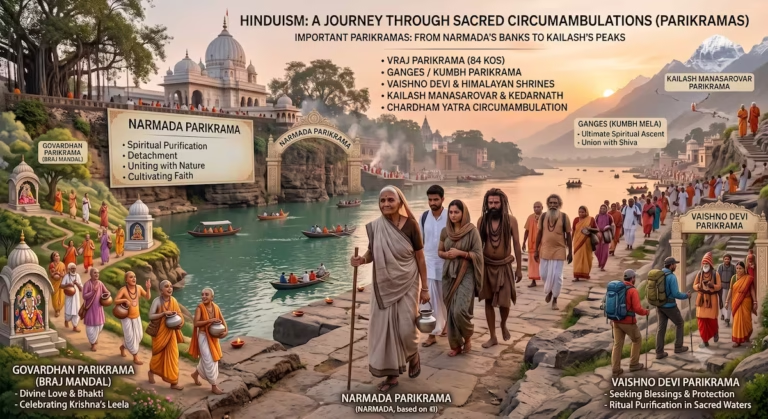
Narmada Parikrama is one of the most respected pilgrimage traditions associated with Maa Narmada. During this sacred practice, devotees travel along one bank of the river toward the Arabian Sea. They then follow traditional rules to cross near the river’s mouth and return along the opposite bank toward the region of its origin.
Pilgrims remember Maa Narmada throughout the journey as their divine mother, guide, and protector. The pilgrimage calls for patience, self-discipline, simplicity, devotion, and respect for nature. Many pilgrims follow strict personal and religious practices throughout the route.
Narmada Parikrama is more than a long walk around a sacred river. For many devotees, it is a form of worship and a period of deep self-reflection. Pilgrims learn to live with fewer comforts and devote more time to prayer. Their faith in Maa Narmada gives the pilgrimage its spiritual meaning.
The birth story of Maa Narmada strengthens this devotion. It reminds pilgrims of her divine origin and her lasting place in Hindu religious traditions. Her sacred presence inspires devotees to continue the ancient practice of parikrama with faith and respect.
Conclusion
The birth story of Maa Narmada connects her divine appearance with Lord Shiva and her descent to Earth for the welfare of living beings. Different Puranic traditions and regional legends describe her origin in different ways. Each version reflects the deep respect devotees hold for her sacred and caring nature.
Maa Narmada begins her westward course at Amarkantak and eventually reaches the Arabian Sea. Along the way, she supports communities, sustains wildlife, and inspires religious devotion. Her pilgrimage sites, the tradition of Narmada Parikrama, and her association with Lord Shiva remain important parts of India’s spiritual heritage.
For millions of devotees, Maa Narmada is more than a river. She is a divine mother who represents faith, care, and spiritual comfort. Her stories continue to guide worshippers and preserve the traditions associated with her sacred waters.
Narmade Har! May Maa Narmada bless everyone with peace, devotion, and spiritual well-being.
Frequently Asked Questions (FAQs)
1. How Was Maa Narmada Born?
Popular Hindu traditions connect the birth of Maa Narmada with the divine power of Lord Shiva. Some regional legends describe her appearance through drops of perspiration from his body. Other traditions focus on her identity as Lord Shiva’s divine daughter.
2. Who Is the Father of Maa Narmada?
Religious tradition regards Maa Narmada as the divine daughter of Lord Shiva. Devotees therefore call her Shivputri, meaning the daughter of Shiva. Her connection with Lord Shiva plays an important role in her worship.
3. Where Did Maa Narmada Originate?
The Narmada Kund at Amarkantak in Madhya Pradesh is traditionally regarded as the sacred source of the Narmada River. The site attracts pilgrims who come to worship Maa Narmada and participate in religious ceremonies.
4. Why Is Maa Narmada Called Reva?
Reva is an ancient name for the Narmada River. Traditional interpretations connect the name with the movement and flow of her waters. Devotees continue to use both Reva Maiya and Narmada Maiya as names of reverence.
5. When Is Maa Narmada Jayanti Celebrated?
Maa Narmada Jayanti is traditionally celebrated on Magha Shukla Saptami, the seventh day of the bright fortnight of the Hindu month of Magha. Devotees mark the occasion with prayers, aarti, lamp offerings, and worship at temples along the river.
6. Why Do Devotees Perform Narmada Parikrama?
Devotees perform Narmada Parikrama to express their faith in Maa Narmada and follow an ancient pilgrimage tradition. The practice encourages prayer, self-discipline, simplicity, and respect for nature. Many pilgrims also undertake the parikrama as a personal act of spiritual devotion.
7. What Is the Relationship Between Maa Narmada and Lord Shiva?
Maa Narmada is traditionally regarded as the daughter of Lord Shiva. Sacred stones found in the river are worshipped as Narmadeshwar Shiva Lingas or Banalingas. These practices reflect the close connection between Narmada worship and devotion to Lord Shiva.
8. What Does “Narmada Ka Har Kankar, Shankar” Mean?
The saying expresses the devotional belief that every stone found in the Narmada River represents Lord Shiva. It reflects the river’s sacred place in Hindu tradition and the longstanding connection between Maa Narmada and Shiva worship.
9. Why Is Maa Narmada Considered Sacred?
Maa Narmada is worshipped as a divine mother who represents purity, care, and spiritual grace. Devotees believe that prayer, remembrance, and worship bring spiritual comfort and blessings. Her river also supports human communities, plants, and wildlife, giving her religious and natural importance.