Important Parikramas in Hinduism: 15 Sacred Parikramas in India
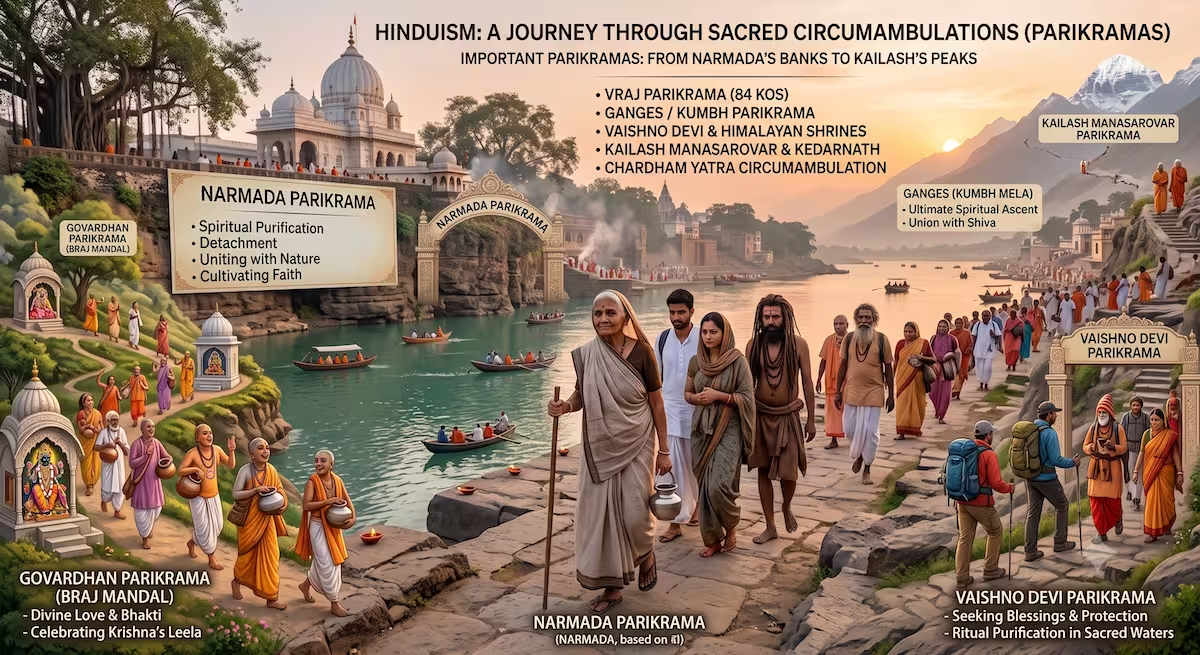
Parikrama is a sacred Hindu practice of walking clockwise around a revered object or place. The tradition appears at temples, mountains, rivers, sacred towns, and wider pilgrimage regions. Some circuits take only a few minutes, while others require several days or months of walking. Important Hindu parikramas include Govardhan Parikrama around its 21-kilometre circuit and Arunachala Girivalam around the roughly 14-kilometre hill route. Among India’s longest sacred circuits, Narmada Parikrama follows both banks of the Narmada River and traditionally covers about 2,600 to 3,500 kilometres.
What Is Parikrama in Hinduism?
Parikrama means moving around a sacred object or place with reverence. Devotees usually walk clockwise, keeping the deity, temple, river, or sacred hill on their right side. The practice expresses respect and keeps the mind focused on the divine. In many Hindu traditions, parikrama and pradakshina describe this same basic act of circumambulation. The scale changes from one tradition to another. A temple pradakshina may take a few minutes, while Narmada Parikrama can cover thousands of kilometres and take many months. Devotees follow these routes with faith, discipline, prayer, and physical effort.
What Is the Meaning of Parikrama?
The word parikrama refers to moving around a sacred centre. The Sanskrit term combines pari, meaning around, with krama, meaning movement or proceeding. The clockwise direction is called pradakshina in Hindu practice. It places the sacred centre on the devotee’s right side. The meaning extends beyond physical movement. A devotee places the deity or sacred presence at the centre of attention. Temple circumambulation may involve one or several rounds. Larger traditions include the 21-kilometre Govardhan Parikrama and the long Narmada Parikrama.
Why Do Hindus Perform Parikrama?
Hindus perform parikrama as an act of devotion, surrender, prayer, and spiritual discipline. Walking around a temple can help devotees focus their thoughts and prayer on the deity. Longer pilgrimages demand greater physical effort and personal discipline. Narmada Parikrama is a clear example. Traditional pilgrims walk along both banks of the Narmada River, covering roughly 2,600 to 3,500 kilometres depending on the route and tradition. Govardhan Parikrama covers about 21 kilometres around Govardhan Hill. For many devotees, such practices support meditation, self-discipline, purification, and a deeper sense of connection with a sacred place.
15 Important Parikramas in Hinduism
India has many sacred parikrama traditions, and each follows its own religious customs and route. Some circuits surround a temple or hill and take a few hours. Others cover sacred towns, rivers, or large pilgrimage regions and require days or months. Narmada Parikrama stands apart for its scale, with pilgrims traditionally following the Narmada River on both banks. Govardhan, Girnar, Arunachala, Kashi, Ayodhya, and Braj have their own well-known circuits. The list below covers 15 important parikramas and related traditions. Distances are approximate. Traditional routes, local customs, starting points, and modern walking routes can produce different figures.
| Parikrama | Location | Associated Sacred Site | Approx. Distance | Type |
| Narmada Parikrama | Madhya Pradesh, Maharashtra, Gujarat | Narmada River | ~2,600–3,500 km | River |
| Govardhan Parikrama | Uttar Pradesh | Govardhan Hill | ~21 km | Hill |
| Girnar Parikrama | Gujarat | Girnar Hill | ~36 km | Hill |
| Arunachala Parikrama | Tamil Nadu | Arunachala Hill | ~14 km | Hill |
| Vrindavan Parikrama | Uttar Pradesh | Vrindavan | ~10–12 km | Sacred town |
| Vraja Mandala Parikrama | Uttar Pradesh | Braj region | ~250 km | Sacred region |
| Kashi Panchkoshi Parikrama | Uttar Pradesh | Kashi | ~80 km | Pilgrimage circuit |
| Ayodhya Parikrama | Uttar Pradesh | Ayodhya | Varies | Sacred city |
| Kamadgiri Parikrama | Uttar Pradesh, Madhya Pradesh | Kamadgiri | ~5 km | Hill |
| Ujjain Panchkoshi Parikrama | Madhya Pradesh | Ujjain | Varies | Sacred region |
| Kurukshetra Parikrama | Haryana | Kurukshetra | Varies | Sacred region |
| Ganga Parikrama | North India | Ganga River | Varies greatly | River |
| Yamuna Parikrama | North India | Yamuna River | Varies greatly | River |
| Puri Parikrama traditions | Odisha | Jagannath tradition | Varies | Temple or region |
| Other regional parikramas | Across India | Various sacred sites | Varies | Various |
Narmada Parikrama
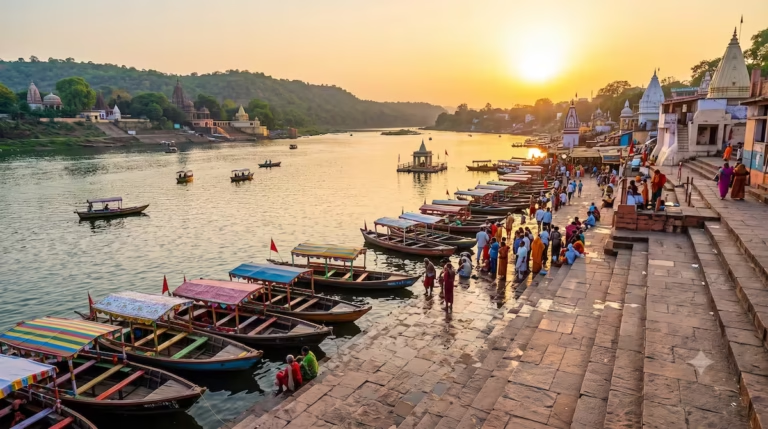
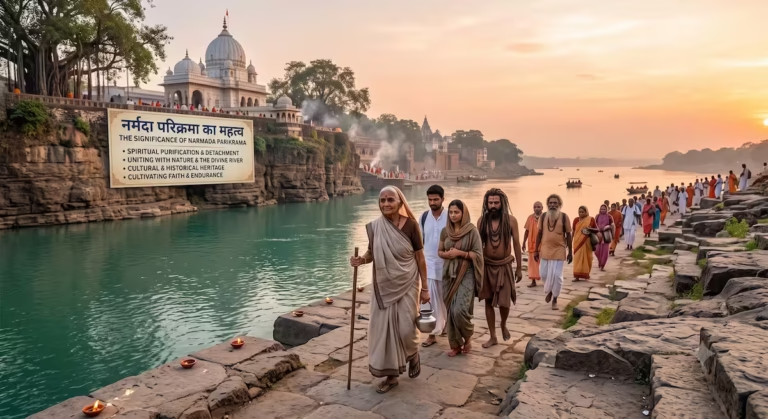
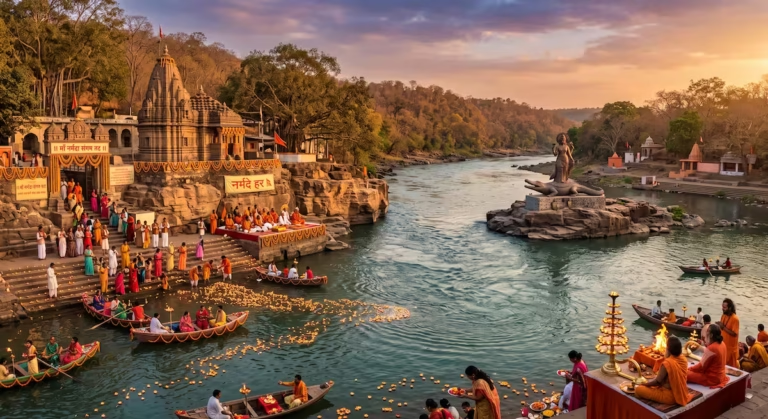
Narmada Parikrama is a traditional Hindu pilgrimage around the sacred Narmada River. Devotees follow the river from its source to the Arabian Sea and return along the opposite bank. The pilgrimage reflects deep devotion to Maa Narmada, who holds a special place in Hindu religious tradition. Many pilgrims begin at Amarkantak, the traditional source of the Narmada, and travel along the southern bank towards the river’s mouth in Gujarat. They cross the river near the Arabian Sea and return along the northern bank. The full circuit traditionally covers several thousand kilometres.
The journey passes through major pilgrimage centres such as Amarkantak, Omkareshwar, Maheshwar, Mandhata, Maheshwar, Garudeshwar, Chandod, Bharuch, and Narmadapuram. Numerous temples, ghats, ashrams, forests, villages, and river confluences appear along the route. The river itself remains the central focus throughout the pilgrimage.
Traditional Narmada Parikrama follows strict rules of conduct. Pilgrims often travel on foot, carry limited belongings, follow a simple daily routine, and maintain regular prayer. Many traditions place strong emphasis on celibacy, simplicity, non-violence, and respect for the river and local communities. The exact rules differ among families, gurus, and pilgrimage traditions.
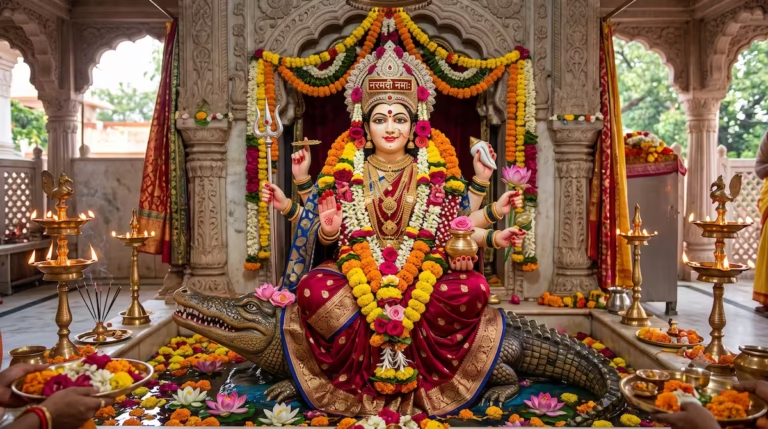
Narmada holds a distinctive position among India’s sacred rivers. Hindu tradition regards the river as a divine mother and associates many ancient temples and pilgrimage sites with her banks. The scale of Narmada Parikrama sets it apart from shorter temple and hill circuits. For many devotees, the physical effort forms an important part of their religious practice.
How Long Is Narmada Parikrama?
The full Narmada Parikrama generally covers around 2,600 to 3,500 kilometres, depending on the route followed. Traditional pilgrims stay close to the river and visit numerous sacred places along both banks. Modern road conditions and route choices can produce different distances. Some routes include additional temples, villages, and sangams, which add kilometres to the circuit. Our detailed Narmada Parikrama Route guide explains the major sections and route variations in greater detail.
How Many Days Does Narmada Parikrama Take?
Traditional Narmada Parikrama is associated with a long period of pilgrimage, with one widely followed tradition placing the duration at 3 years, 3 months, and 13 days. Many modern pilgrims complete the journey in a shorter period through planned walking schedules and different travel arrangements. Shorter versions of the pilgrimage exist too. The time required depends on the route, walking distance each day, religious practices, and stops at sacred places. Our Narmada Parikrama Guide covers duration, preparation, route planning, and practical details.
What Are the Main Sacred Places on Narmada Parikrama?
The route includes many sacred places connected with Narmada worship and Hindu pilgrimage. Amarkantak is associated with the river’s origin. Omkareshwar is one of the most revered Shiva pilgrimage centres on the Narmada. Maheshwar is known for its temples and historic ghats. Bharuch stands near the Narmada’s meeting point with the Arabian Sea. Pilgrims visit many other temples, ghats, ashrams, and river confluences along both banks. Explore our guides to Narmada Ghats, Narmada Sangams, Narmada Parikrama Ashrams, and Narmada Temples for detailed information about these sacred places.
Govardhan Parikrama
Govardhan Parikrama is one of the best-known pilgrimage circuits in the Braj region of Uttar Pradesh. The tradition is closely linked with Lord Krishna, who is believed to have lifted Govardhan Hill to protect the people of Braj from heavy rain sent by Indra. Devotees treat Govardhan Hill as a sacred form associated with Krishna and walk around it as an act of worship.
The traditional circuit covers about 21 kilometres and passes through several temples, kunds, shrines, and sacred spots connected with Krishna’s life. Many pilgrims complete the route barefoot as a sign of devotion. Some devotees perform the circuit while chanting Krishna’s name or carrying out repeated prostrations.
Important places along the route include Govardhan, Radha Kund, Shyam Kund, Kusum Sarovar, and Mansi Ganga. Govardhan Puja, celebrated after Diwali, holds a special place in this tradition. Devotees worship Govardhan Hill and prepare offerings known as Annakut.
For pilgrims, the parikrama represents devotion to Krishna and reverence for the sacred places of Braj. The practice remains active throughout the year, with larger crowds during festivals and auspicious days.
What Is the Distance of Govardhan Parikrama?
The traditional Govardhan Parikrama distance is about 21 kilometres. The circuit begins and ends around Govardhan Hill and passes several important temples, kunds, and pilgrimage sites. Most devotees walk the route on foot, and many complete it barefoot. The time required depends on walking speed, rest stops, prayers, and crowd conditions. A full circuit commonly takes several hours.
Girnar Parikrama
Girnar Parikrama is a major pilgrimage tradition centred on Girnar Hill near Junagadh, Gujarat. The hill has deep religious importance for both Hindu and Jain communities. Hindu traditions associate Girnar with several deities, saints, and sacred sites, while Jain pilgrims visit temples linked with Lord Neminath, the 22nd Tirthankara.
The annual parikrama attracts large numbers of pilgrims who walk through the forests and foothills around Girnar. The route combines religious sites with rugged terrain, forest sections, streams, and hill paths. The traditional circuit is commonly described as roughly 36 kilometres, though the distance can vary with the route followed.
Pilgrims visit temples, shrines, kunds, and other sacred spots during the circuit. Many devotees complete the route on foot as an act of prayer and religious discipline. The pilgrimage also forms an important part of Gujarat’s wider religious culture.
When Is Girnar Parikrama Held?
Girnar Parikrama is traditionally held during the Hindu month of Kartik, around the time of the Kartik Purnima festival. The event usually attracts pilgrims over several days. Devotees walk the traditional circuit around Girnar Hill, visit sacred sites, and offer prayers. The annual pilgrimage holds a special place in the religious traditions of Junagadh and Gujarat.
Arunachala Parikrama
Arunachala Parikrama, known locally as Girivalam, is a revered pilgrimage around Arunachala Hill in Tiruvannamalai, Tamil Nadu. Hindu tradition identifies Arunachala with Lord Shiva and regards the hill itself as a sacred form of Shiva. Devotees walk around the hill as an act of worship, prayer, and devotion.
The Girivalam route is about 14 kilometres and passes several temples, shrines, lingams, and sacred spots. The route begins near the Arunachaleswarar Temple and follows the road around Arunachala Hill. The eight directional Shiva lingams are among the important religious sites along the circuit.
Full-moon days attract especially large crowds. Many devotees undertake Girivalam at night or during the cooler hours around the full moon. Karthigai Deepam, one of Tiruvannamalai’s major festivals, brings a much larger pilgrimage gathering to the town. The practice connects daily worship with the sacred geography of Arunachala.
What Is Arunachala Girivalam?
Arunachala Girivalam is the Tamil name commonly used for the pilgrimage walk around Arunachala Hill. Giri means hill, and valam refers to going around it in the traditional clockwise direction. The terms Girivalam and Parikrama describe the same basic practice here. Devotees usually complete the roughly 14-kilometre circuit on foot, with full-moon days being especially popular.
Vrindavan Parikrama
Vrindavan Parikrama is a sacred walking circuit linked with the life and worship of Lord Krishna and Radha. Vrindavan in Uttar Pradesh is regarded as one of the most important pilgrimage towns in the Braj region. Devotees connect the town with Krishna’s childhood and youthful pastimes with Radha and the gopis.
The Yamuna River has a central place in Vrindavan’s religious traditions. Pilgrims often include Yamuna ghats and riverside shrines during their visit. Important temples such as Banke Bihari Temple, Radha Raman Temple, and ISKCON Vrindavan form part of the town’s pilgrimage network.
The traditional Vrindavan Parikrama follows a walking route of roughly 10 to 12 kilometres. Devotees usually walk clockwise, often chanting Krishna’s name and visiting temples and sacred spots along the way. The practice represents devotion, prayer, remembrance of Krishna, and a close connection with the sacred geography of Braj.
Vraja Mandala Parikrama
Vraja Mandala Parikrama is a broader pilgrimage circuit covering the sacred Braj region associated with the life and traditions of Lord Krishna. Braj includes places linked with Krishna’s childhood, his time with Radha and the gopis, and important events from Krishna’s life. The pilgrimage connects many towns, villages, forests, kunds, temples, and sacred sites across the region.
Major places associated with the circuit include Mathura, Vrindavan, Govardhan, Barsana, Nandgaon, Gokul, and Baldeo. Pilgrims visit these places through an extended walking tradition that follows the sacred geography of Braj.
Vraja Mandala Parikrama is much broader than Govardhan Parikrama. Govardhan Parikrama circles Govardhan Hill and covers roughly 21 kilometres. Vraja Mandala Parikrama covers a much larger area and traditionally takes several weeks to complete. Devotees undertake the longer circuit for prayer, remembrance of Krishna, and deeper engagement with the sacred places of Braj.
Kashi Panchkoshi Parikrama
Kashi Panchkoshi Parikrama is a traditional pilgrimage circuit around the sacred city of Kashi, also known as Varanasi. Hindu tradition regards Kashi as a city closely associated with Lord Shiva and the sacred presence of Vishwanath. The Panchkoshi pilgrimage extends beyond the central temple area and covers a wider sacred boundary around Kashi.
The traditional circuit is about 80 kilometres and is divided into five sections. Pilgrims visit temples, shrines, kunds, villages, and other places connected with Kashi’s religious traditions. Important places along the wider pilgrimage route include Kardameshwar, Bhimchandi, Rameshwar, Shivpur, and Kapiladhara.
Devotees traditionally complete the circuit on foot over several days. They stop at prescribed pilgrimage points, offer prayers, and follow customary rituals. The pilgrimage represents devotion to Shiva and a physical passage through the sacred geography of Kashi.
What Does Panchkoshi Mean?
Panchkoshi refers to a traditional sacred boundary measured in five kos. A kos is an old Indian unit of distance, with its exact modern equivalent varying by region and historical period. In Kashi tradition, the Panchkoshi route marks the wider sacred area of the city. The pilgrimage follows this traditional boundary through a prescribed circuit.
Ayodhya Parikrama
Ayodhya Parikrama is a traditional pilgrimage practice in the sacred city associated with Lord Rama and the Ramayana. Hindu tradition identifies Ayodhya as the birthplace of Rama and a major centre of Rama worship. Pilgrims visit temples, ghats, kunds, and other places connected with the city’s religious history.
Ayodhya has more than one traditional parikrama circuit. The 14-kos Parikrama covers the wider sacred area around the city, while the 5-kos Parikrama follows a shorter circuit around central Ayodhya. Pilgrims traditionally complete these routes on foot, stopping at important shrines and offering prayers.
Parikrama gatherings become especially large during festivals and religious occasions such as Ram Navami, Kartik Purnima, and Akshaya Navami. Devotees undertake the circuit as an act of worship, remembrance of Rama, and spiritual discipline. The practice also connects pilgrims with Ayodhya’s temples, sacred places, and long-standing Ramayana traditions.
Kamadgiri Parikrama
Kamadgiri Parikrama is a sacred pilgrimage around Kamadgiri Hill in Chitrakoot, on the Uttar Pradesh and Madhya Pradesh border. Hindu tradition closely connects Chitrakoot with Lord Rama, Sita, and Lakshmana. The Ramayana tradition holds that Rama spent part of his exile in this region.
The Kamadgiri circuit covers roughly 5 kilometres and is usually completed on foot in a clockwise direction. The route passes several temples and shrines linked with Rama and other Hindu traditions. The Kamadgiri Temple is the main shrine on the circuit, and devotees also visit places such as Bharat Milap Temple and Hanuman Dhara during a wider Chitrakoot pilgrimage.
Pilgrims undertake the parikrama as an act of devotion, prayer, and remembrance of Rama’s time in Chitrakoot. The hill is regarded as sacred itself, so walking around it forms an important part of worship.
For more river-based pilgrimage traditions, see Sacred Places Associated with Narmada Parikrama.
Other Important Parikramas in Hinduism
India has many regional parikrama traditions linked with sacred cities, rivers, hills, temples, and pilgrimage regions. Some follow fixed routes, and others vary by local tradition. The following examples add further context to the wide range of Hindu circumambulation practices.
Ujjain Panchkoshi Parikrama
Ujjain Panchkoshi Parikrama follows a traditional pilgrimage circuit around the sacred area of Ujjain in Madhya Pradesh. Ujjain is closely associated with Lord Shiva and the Mahakaleshwar Jyotirlinga. Pilgrims visit temples and shrines along the route and follow established rituals. The circuit forms part of Ujjain’s wider pilgrimage traditions.
Kurukshetra Parikrama
Kurukshetra Parikrama covers sacred places across the Kurukshetra region of Haryana. Hindu tradition connects Kurukshetra with the Mahabharata and the teachings of the Bhagavad Gita. Pilgrims visit temples, lakes, kunds, and other revered sites across the region. The pilgrimage is linked with religious observances and festivals held at important sacred locations.
Ganga Parikrama
Ganga Parikrama refers to pilgrimage traditions that follow the course of the sacred Ganga River. The river is revered as Goddess Ganga and holds a central place in Hindu worship. Unlike shorter fixed circuits, a Ganga pilgrimage can cover a very large area. Pilgrims visit important places such as Gangotri, Haridwar, Prayagraj, Varanasi, and Ganga Sagar.
Yamuna Parikrama
Yamuna Parikrama follows pilgrimage traditions connected with the Yamuna River and the sacred Braj region. The river has a strong connection with Krishna traditions, especially around Mathura and Vrindavan. Pilgrims visit Yamuna ghats, temples, and sacred places along the river. The route and duration can vary according to the tradition followed by the pilgrim.
Other Temple and Sacred Site Parikramas
Many Hindu temples have their own pradakshina or parikrama routes. Devotees may circle the main shrine at Tirupati, Jagannath Puri, Somnath, Rameswaram, and other major pilgrimage centres. Sacred hills and regional pilgrimage sites also have established circuits. These practices can range from a short temple walk to longer routes covering several kilometres.
Types of Parikramas in Hinduism
Hindu parikrama traditions can be grouped by the sacred object, natural feature, city, or region that devotees circumambulate. The route, distance, rituals, and duration vary across traditions. Some circuits take only a few minutes, while others can require days, weeks, or several years.
Temple Parikrama
Temple parikrama involves walking clockwise around the main shrine or sanctum of a Hindu temple. Devotees keep the sacred presence on their right side and often recite prayers or mantras. The circuit may be short, and pilgrims can repeat it several times as part of their worship.
Mountain and Hill Parikrama
Mountain and hill parikramas circle sacred hills associated with Hindu deities, saints, or religious traditions. Govardhan, Girnar, Arunachala, and Kamadgiri are major examples. These circuits can range from about 5 kilometres at Kamadgiri to several dozen kilometres at Girnar.
River Parikrama
River parikrama follows the banks or sacred course of a revered river. Narmada Parikrama is one of India’s longest pilgrimage traditions, covering thousands of kilometres along both banks. Ganga and Yamuna pilgrimage traditions also connect devotees with sacred river places, temples, ghats, and major pilgrimage centres.
Sacred City and Region Parikrama
Sacred city and region parikramas cover larger pilgrimage areas linked with particular deities or religious traditions. Kashi, Ayodhya, Braj, and Ujjain have established circuits. These pilgrimages can include temples, rivers, kunds, ghats, villages, and other sacred places within a traditional boundary.
Which Is the Longest Parikrama in Hinduism?
There is no single agreed answer to the question of which is the longest parikrama in Hinduism. Distances vary by route, starting point, sacred places included, and local pilgrimage tradition. Some circuits cover a fixed area, while river pilgrimages can extend across hundreds or thousands of kilometres.
Narmada Parikrama is one of India’s longest established river pilgrimage traditions. The full traditional circuit follows both banks of the Narmada River and is commonly estimated at around 2,600 to 3,500 kilometres, depending on the route followed. Traditional practice can take several years.
Vraja Mandala Parikrama covers the wider Braj region and is often associated with a circuit of roughly 250 kilometres. Ganga-related pilgrimage traditions can cover much greater distances, but they do not follow one universally fixed route. Other regional circuits also vary considerably.
What Is the Difference Between Parikrama and Pradakshina?
Parikrama and pradakshina both describe the practice of moving around a sacred object or place in a clockwise direction. In both practices, devotees keep the sacred presence on their right side and perform the circuit as an act of worship.
Pradakshina is commonly used for circumambulation around a temple shrine, deity, sacred fire, or other consecrated object. A devotee may complete one or several rounds around the sanctum during daily worship.
Parikrama has a broader use in pilgrimage traditions. It can describe walking around a temple, hill, river, sacred city, or an entire pilgrimage region. Govardhan Parikrama, Arunachala Parikrama, and Narmada Parikrama show how the term applies to circuits ranging from a few kilometres to several thousand kilometres.
The two words overlap in meaning, so people often use them interchangeably. The main difference comes from context. Pradakshina often refers to a shorter act of worship, while parikrama commonly describes a larger pilgrimage circuit.
How to Perform a Parikrama According to Hindu Tradition
Parikrama is performed according to the customs of the sacred place and the tradition followed by the devotee. A temple pradakshina may take only a few minutes, while a major pilgrimage such as Narmada Parikrama can involve months or years of disciplined practice. There is no single set of rules for every parikrama.
Begin With Prayer and Sankalpa
Many devotees begin with a prayer and sankalpa, a personal statement of spiritual intention. The devotee may pray for strength, guidance, gratitude, or fulfilment of a religious purpose. The opening prayer can take place at a temple, riverbank, shrine, or the starting point of the circuit.
Follow the Traditional Direction
Clockwise movement is the common tradition in Hindu parikrama. The devotee keeps the deity, temple, hill, river, or other sacred presence on the right side during the circuit. Some traditions prescribe specific starting points and stopping places.
Maintain Discipline and Devotion
Devotees often maintain a simple routine during parikrama. This can include prayer, mantra chanting, meditation, controlled speech, vegetarian food, and personal cleanliness. Longer pilgrimages may follow additional rules related to clothing, possessions, rest, travel, and daily conduct.
Respect Sacred Places and Local Customs
Pilgrims should follow the customs of each sacred place and respect temples, shrines, rivers, forests, and local communities. Some sites have rules about footwear, photography, bathing, clothing, food, and entry. Longer pilgrimages can also have specific practices taught by local priests, guides, or spiritual teachers.
Frequently Asked Questions About Important Parikramas in Hinduism
What are the most important parikramas in Hinduism?
Important Hindu parikramas include Narmada Parikrama, Govardhan Parikrama, Girnar Parikrama, Arunachala Girivalam, Vraja Mandala Parikrama, Kashi Panchkoshi Parikrama, Ayodhya Parikrama, and Kamadgiri Parikrama. Each has its own sacred geography, religious traditions, route, and rituals.
Which is the longest parikrama in Hinduism?
Narmada Parikrama is one of the longest established parikrama traditions in India. The traditional circuit follows both banks of the Narmada River and is commonly estimated at around 2,600 to 3,500 kilometres. Exact distance varies with the route and sacred places visited.
What is the most famous parikrama in India?
Narmada Parikrama, Govardhan Parikrama, and Arunachala Girivalam are among India’s best-known pilgrimage circuits. Their fame comes from their strong connections with Hindu traditions and major sacred centres. Narmada Parikrama is especially known for its long river circuit and demanding pilgrimage discipline.
How long is Narmada Parikrama?
Narmada Parikrama is commonly estimated at around 2,600 to 3,500 kilometres. The distance changes according to the route, river crossings, detours, and sacred places included. Traditional pilgrims follow both banks of the river and maintain a disciplined pilgrimage routine.
How long is Govardhan Parikrama?
The traditional Govardhan Parikrama route is roughly 21 kilometres around Govardhan Hill in Uttar Pradesh. Pilgrims usually complete the circuit on foot and visit important places such as Radha Kund, Shyam Kund, Kusum Sarovar, and Mansi Ganga along the wider pilgrimage route.
What is the difference between parikrama and pradakshina?
Both terms describe circumambulation of a sacred object or place, usually in a clockwise direction. Pradakshina is commonly used for temple and shrine worship. Parikrama often refers to larger pilgrimage circuits around hills, rivers, cities, or sacred regions. The terms are also used interchangeably in many traditions.
Why do Hindus perform parikrama?
Hindus perform parikrama as an act of devotion, prayer, surrender, and remembrance. Walking around a sacred presence allows devotees to focus their thoughts on the deity or pilgrimage tradition. Longer circuits also involve discipline, physical effort, simple living, and regular worship.
Which parikramas are associated with Lord Shiva?
Several major parikramas have strong connections with Lord Shiva. Arunachala Parikrama in Tiruvannamalai is associated with Arunachala as a sacred form of Shiva. Kashi Panchkoshi Parikrama is linked with Shiva’s sacred city of Kashi. Girnar also has important Shaiva traditions alongside its Jain pilgrimage traditions.
Which parikramas are associated with Lord Krishna?
Govardhan Parikrama, Vrindavan Parikrama, and Vraja Mandala Parikrama are strongly associated with Lord Krishna. These circuits cover places connected with Krishna’s life and traditions in Braj. Pilgrims visit Govardhan, Mathura, Vrindavan, Barsana, Nandgaon, Gokul, and other sacred places across the region.
Conclusion: The Spiritual Meaning of Parikrama
Parikrama takes many forms across Hindu pilgrimage traditions. A devotee may walk around a temple shrine, a sacred hill, a river, a city, or an entire pilgrimage region. The routes differ in distance and ritual, but faith and devotion remain central to the practice.
Parikrama also demands discipline. Pilgrims follow traditional routes, offer prayers, respect sacred places, and accept the physical effort involved. River and hill circuits create a direct connection with nature and sacred geography.
Narmada Parikrama represents this tradition on an extraordinary scale. Its long route along the Narmada connects temples, ghats, forests, villages, and riverbanks through one extended act of devotion.
Parikrama is not simply walking around a sacred place. It is a practice of faith, discipline, pilgrimage, and surrender. For many devotees, each step becomes an expression of reverence toward the deity, the sacred land, and the divine presence found within it.