Narmada Ghats for Aarti: Important Places, Rituals and Visiting Tips
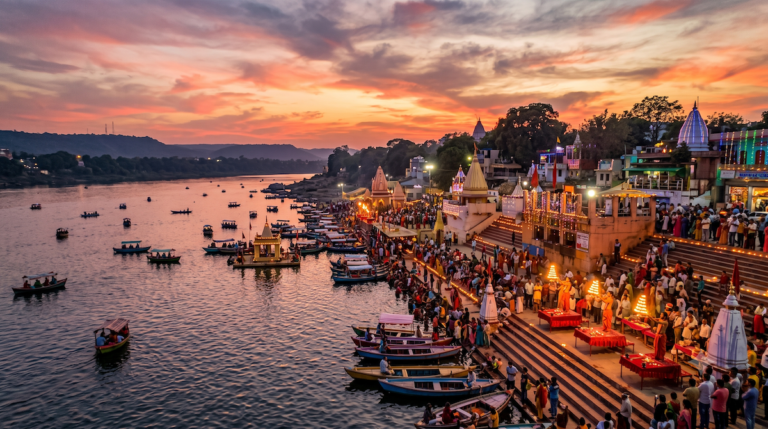
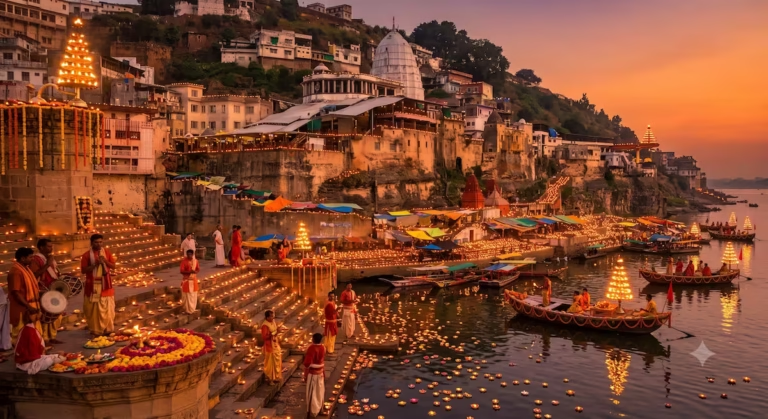
Narmada Aarti is a Hindu worship ritual dedicated to Maa Narmada. Devotees gather beside the river to offer prayers, sing devotional songs and watch priests perform aarti with lamps.
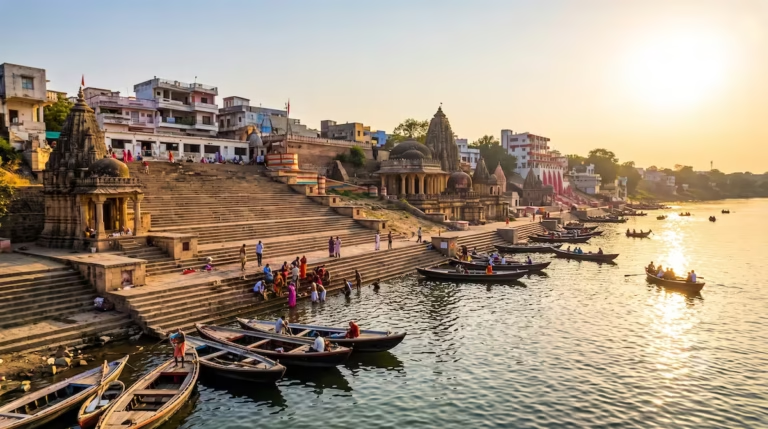
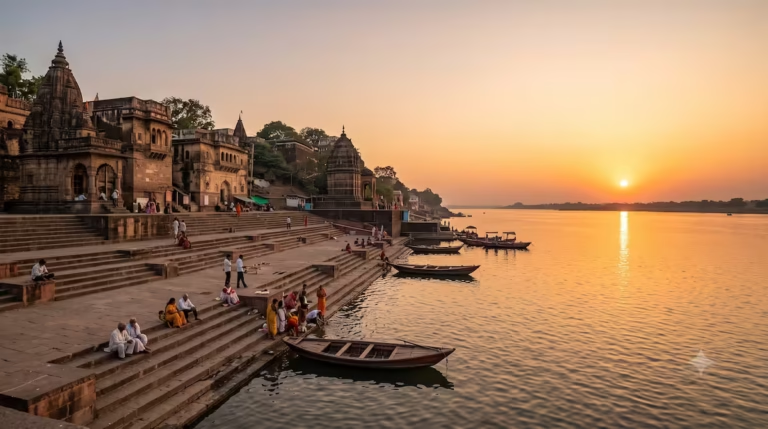
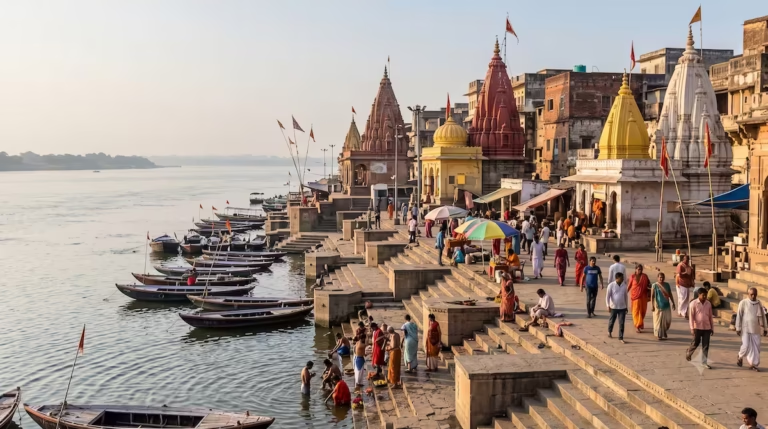
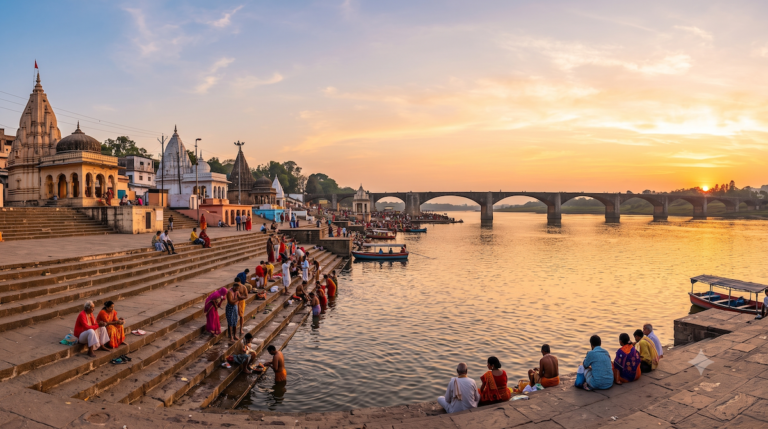
Several towns along the Narmada have riverfront ghats where devotees attend aarti. Gwarighat in Jabalpur, Kotitirth Ghat in Omkareshwar and the ghats of Maheshwar are well-known places for Narmada worship. Madhya Pradesh Tourism and the Omkareshwar Temple Trust provide information about these religious experiences.
This guide covers important Narmada ghats for aarti, their religious setting and practical details for visitors.
What Is Narmada Aarti?
Narmada Aarti is a traditional Hindu ritual performed to honour Maa Narmada. Priests offer lamps, incense and prayers near the river as devotees gather to worship.
Many devotees regard the Narmada as a sacred goddess. Traditional Hindu belief associates the river with spiritual merit, purification and divine blessings.
The ritual often includes devotional songs, bells, lamps and collective prayers. The exact form of aarti varies between towns and temples.
Evening aarti is common at several Narmada pilgrimage centres. Some locations hold special ceremonies during Narmada Jayanti, Mahashivratri and other religious occasions.
Important Narmada Ghats for Aarti
1. Gwarighat, Jabalpur
Gwarighat is one of the best-known places to attend Narmada Aarti in Jabalpur. Madhya Pradesh Tourism highlights the evening worship at Gwarighat as a major local attraction.
Devotees gather beside the river to watch the ceremony and offer prayers to Maa Narmada. The ghat also attracts large crowds during Narmada Jayanti, when Jabalpur hosts religious processions and special aarti programmes.
Visitors can combine Gwarighat with a wider visit to Jabalpur’s temples and river attractions.
2. Kotitirth Ghat, Omkareshwar
Kotitirth Ghat is a major religious location near Omkareshwar Jyotirlinga Temple. The official temple website states that Narmada Aarti takes place here every evening.
Devotees visit the ghat after temple darshan to offer prayers to Maa Narmada. The riverfront forms an important part of the religious experience at Omkareshwar.
Visitors who want to perform the aarti themselves should check the temple’s current booking arrangements. The temple website distinguishes participation in the ritual from watching the ceremony.
3. Maheshwar Ghats
Maheshwar is known for its historic riverfront, temples and ghats associated with Maharani Ahilyabai Holkar. Madhya Pradesh Tourism identifies the Narmada Ghat as a major attraction in the town.
The ghats provide places for prayer, river worship and evening visits. Visitors can view the historic fort and palace from the riverfront and explore nearby temples.
Aarti arrangements can vary by location and occasion. Ask locally about the current ceremony time before planning your visit.
4. Narmada Udgam, Amarkantak
Amarkantak is traditionally regarded as the source of the Narmada. Pilgrims visit the Narmada Udgam Temple and its sacred kund to worship Maa Narmada.
The source area is particularly important for devotees beginning or completing Narmada Parikrama. Narmada Jayanti attracts pilgrims who come to worship the river at its traditional origin.
Visitors should check local temple announcements for aarti timings and special festival programmes.
5. Bharuch Riverfront
Bharuch is an ancient city on the lower Narmada in Gujarat. Its riverfront contains historic ghats and temples connected with Narmada worship.
Dashashwamedh Ghat and Narmada Mata Temple are among the religious places associated with the city’s riverfront. Visitors can include these sites in a wider pilgrimage through the lower Narmada region.
Confirm local aarti arrangements before travelling specifically for an evening ceremony.
What Happens During Narmada Aarti?
The exact ceremony depends on the temple or ghat. A typical aarti may include several activities.
- Priests prepare lamps and other ritual items.
- Devotees gather near the worship area.
- Priests offer lamps while reciting prayers or singing devotional hymns.
- Bells and devotional music accompany the ceremony at some locations.
- Devotees join the prayers and seek blessings.
- Some visitors make offerings according to local custom.
Visitors can observe the ceremony without taking part in every ritual. Follow instructions from priests and local organisers.
Best Time to Attend Narmada Aarti
Evening is a common time for Narmada Aarti at major pilgrimage centres. Exact timings depend on the location, season and temple schedule.
October to March is generally comfortable for visiting many Narmada ghats. Summer evenings can also be suitable for riverfront visits.
Narmada Jayanti is an important occasion for worship across the Narmada region. The festival is observed according to the Hindu lunar calendar and can attract large crowds at major ghats.
Check current timings before travelling. Special ceremonies may follow different schedules.
How to Prepare for a Visit
- Reach the ghat early enough to find a suitable viewing place.
- Wear modest clothing at temples and religious sites.
- Follow local rules about footwear, photography and offerings.
- Keep children close to adults near the water.
- Avoid pushing through crowds during busy ceremonies.
- Carry drinking water during hot weather.
- Keep plastic and other waste away from the river.
- Follow safety instructions near the ghat.
Do not enter the river during strong currents or unsafe water conditions.
Narmada Aarti and Narmada Parikrama
Narmada Parikrama is a traditional pilgrimage around the Narmada River. Pilgrims visit temples, ghats, ashrams and sacred places along the riverbanks.
Aarti can form part of a pilgrim’s daily worship during the Parikrama. Some pilgrims attend public ceremonies, while others perform personal prayers according to their tradition.
Gwarighat, Omkareshwar, Maheshwar, Amarkantak and Bharuch offer different settings for Narmada worship. Each place has its own religious history and local customs.
Pilgrims should follow the practices of their chosen Parikrama tradition and seek local guidance where needed.
FAQs About Narmada Aarti
Which ghat is famous for Narmada Aarti?
Gwarighat in Jabalpur and Kotitirth Ghat in Omkareshwar are well-known locations for Narmada Aarti. Maheshwar is another important centre for Narmada worship.
What time does Narmada Aarti take place?
Many locations hold aarti in the evening. Exact timings vary by ghat, temple and season, so confirm locally before visiting.
Can visitors attend Narmada Aarti?
Visitors can attend public aarti ceremonies where access is permitted. Special participation or puja services may require arrangements through the temple or organisers.
When is Narmada Aarti most crowded?
Crowds often increase during Narmada Jayanti, Mahashivratri and other major religious occasions. Arrive early during festivals.
Can I attend Narmada Aarti during Parikrama?
Yes. Pilgrims can attend aarti at locations along their route when the ceremony and their daily schedule allow.
Is Narmada Aarti performed at Amarkantak?
Amarkantak is an important place for worship at the traditional source of the Narmada. Check local temple schedules for current aarti arrangements.
Explore More Narmada Guides
Continue your journey with our guides to Narmada Ghats, Narmada Pilgrimage Places, Narmada Parikrama Route, Narmada Parikrama Rules, Narmada Ashrams and Narmada Sangams.