Koti Tirtha Ghat Omkareshwar: History, Religious Significance and Narmada River
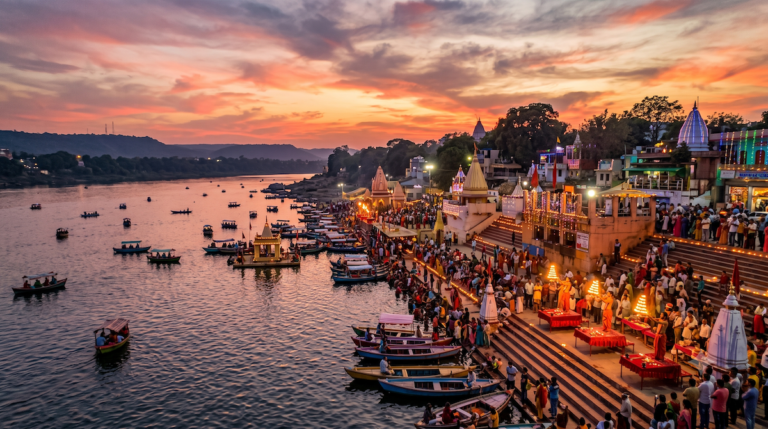
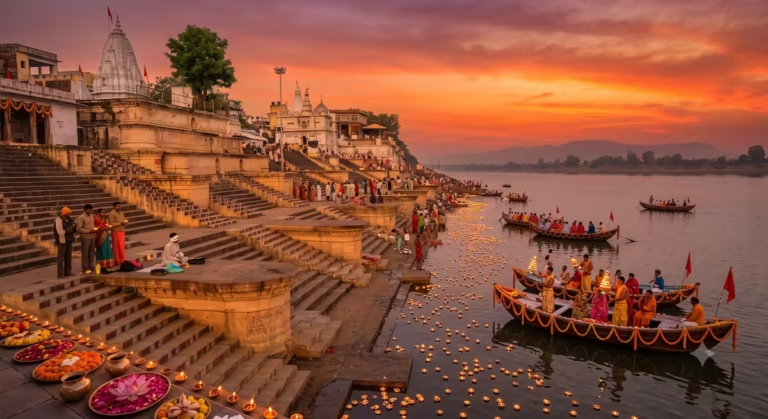
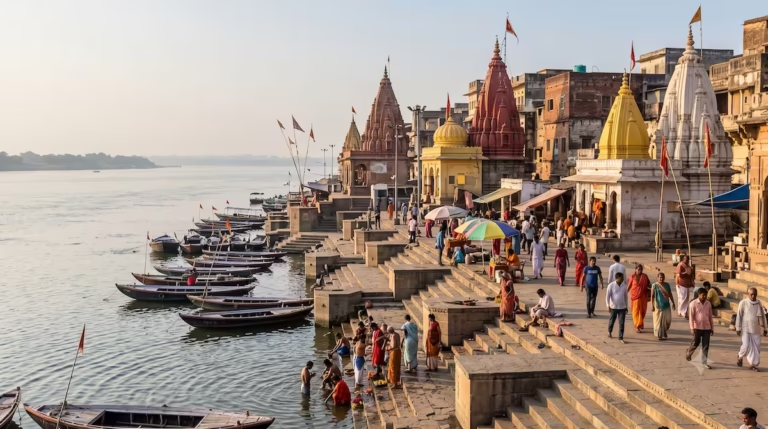
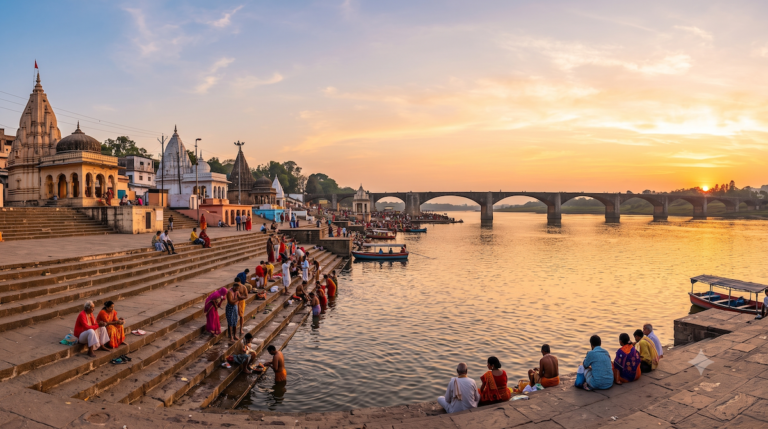
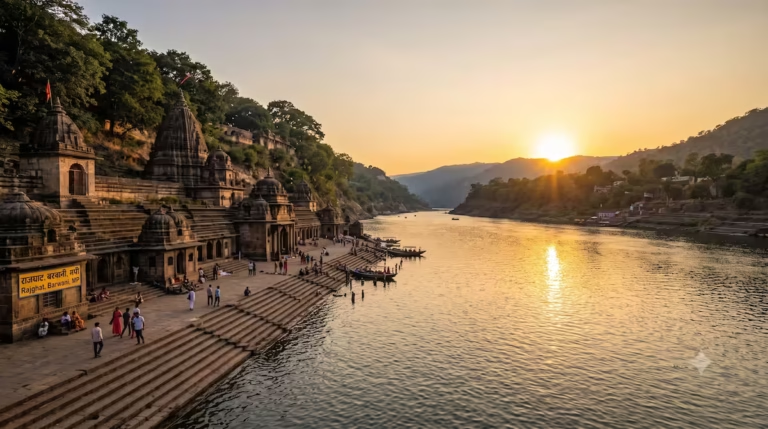
Koti Tirtha Ghat is an important riverfront location on the Narmada at Omkareshwar in Madhya Pradesh. The ghat is connected with the religious traditions of the Narmada and the wider pilgrimage landscape of Omkareshwar.
Omkareshwar is one of the most important Shaiva pilgrimage centres associated with the Narmada. The town attracts devotees throughout the year, with many visitors combining temple worship with time beside the river.
Koti Tirtha Ghat provides access to the Narmada for bathing, prayer and traditional religious activities. Its location makes it relevant to both pilgrims and visitors exploring Omkareshwar.
Where Is Koti Tirtha Ghat?
Koti Tirtha Ghat is located in Omkareshwar, Khandwa district of Madhya Pradesh. It lies along the Narmada within the temple town.
The ghat forms part of the network of riverfront steps and bathing places around Omkareshwar. Several temples and religious sites are located nearby.
Its position also makes it useful for pilgrims visiting the main Omkareshwar temple and other sacred places around the Narmada.
Religious Significance of Koti Tirtha Ghat
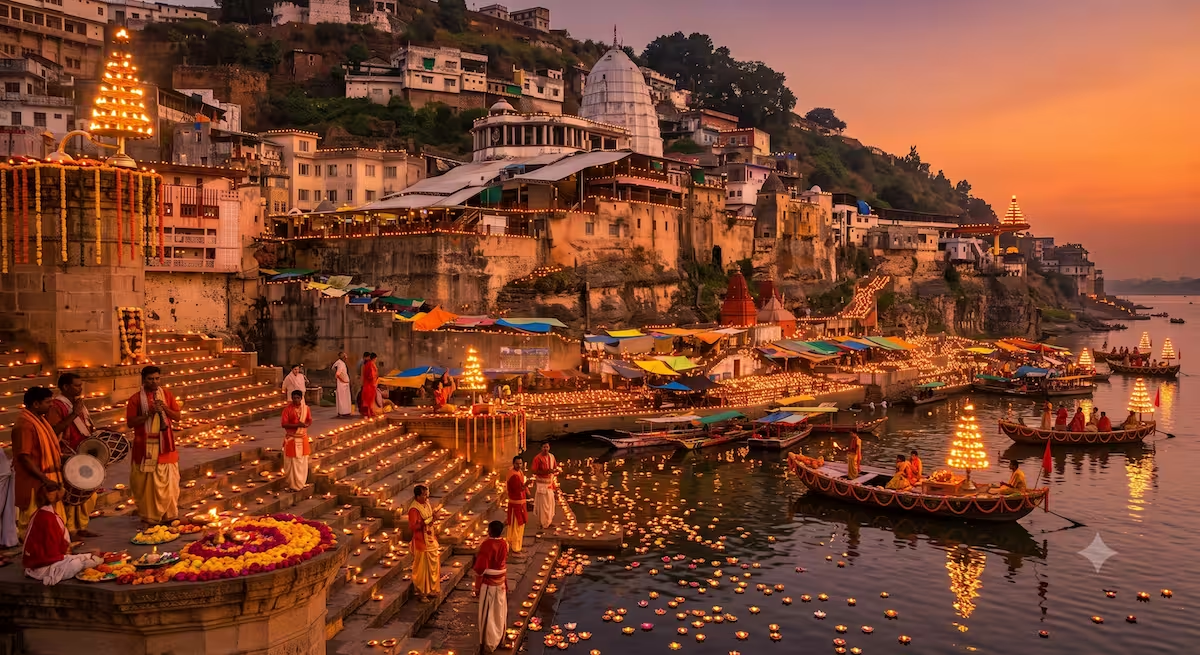
Traditional Hindu belief regards the Narmada as a sacred river. Riverfront ghats at Omkareshwar provide places for devotees to pray, bathe and perform traditional rituals.
Koti Tirtha Ghat is associated with these river-based religious activities. Devotees may visit the ghat before or after visiting nearby temples.
The word “Tirtha” refers to a sacred place or crossing in Hindu religious tradition. The name Koti Tirtha therefore reflects the site’s religious association.
Specific traditions and ritual practices can vary among devotees. Visitors should follow local customs during ceremonies and religious activities.
Koti Tirtha Ghat and Narmada Worship
Narmada worship is an important part of religious life in Omkareshwar.
Devotees may offer prayers beside the river, perform traditional bathing rituals or spend time in quiet reflection. Religious activity is particularly visible during festivals and major pilgrimage occasions.
The riverfront also provides views of the Narmada as it passes around the Omkareshwar area.
Visitors should avoid treating the ghat only as a sightseeing location. It remains an active religious space used by devotees.
Connection With Omkareshwar Temple
Koti Tirtha Ghat is located within the wider sacred area of Omkareshwar.
Omkareshwar Jyotirlinga is one of the twelve Jyotirlinga shrines traditionally revered by devotees of Lord Shiva. The temple stands on Mandhata Island, which is formed by the Narmada and its channel.
Many pilgrims combine temple darshan with visits to the riverfront ghats.
Koti Tirtha Ghat can therefore be included as part of a broader Omkareshwar pilgrimage rather than treated as an isolated destination.
Koti Tirtha Ghat and Narmada Parikrama
Narmada Parikrama is a traditional pilgrimage around the Narmada. Pilgrims follow the river while visiting temples, ghats, ashrams and other sacred places.
Omkareshwar holds an important place in many Narmada pilgrimage traditions. Pilgrims travelling through this section of the river often visit the town and its religious sites.
Koti Tirtha Ghat can form part of such a visit. However, individual Parikrama routes and practices vary.
Pilgrims travelling on foot may spend more time in Omkareshwar, while visitors travelling by vehicle may follow a shorter itinerary.
Other Ghats Near Koti Tirtha Ghat
Omkareshwar has several riverfront areas connected with bathing, prayer and religious activities.
Gomukh Ghat
Gomukh Ghat is among the riverfront locations associated with religious activities around Omkareshwar.
Nagar Ghat
Nagar Ghat is another riverfront area within the pilgrimage town. It can be included while walking through the older parts of Omkareshwar.
Abhay Ghat
Abhay Ghat is another location along the Narmada where visitors can experience the riverfront and local religious atmosphere.
The exact use and accessibility of individual ghats can change with river conditions and local arrangements.
What to See Around Koti Tirtha Ghat
A visit to Koti Tirtha Ghat can be combined with several major attractions around Omkareshwar.
Omkareshwar Jyotirlinga
The Omkareshwar temple is the main pilgrimage attraction in the town. It is traditionally revered as one of the twelve Jyotirlingas of Lord Shiva.
Mamleshwar Temple
Mamleshwar Temple stands on the southern side of the Narmada and is closely associated with Omkareshwar’s religious traditions.
Mandhata Island
Mandhata Island is surrounded by the Narmada and is central to the geography of Omkareshwar. Pilgrims walk through the island’s temples, lanes and riverfront areas.
Narmada River
The Narmada remains central to the religious identity of Omkareshwar. Riverfront walks provide a different experience from visiting the temples.
Best Time to Visit Koti Tirtha Ghat
October to March is generally comfortable for visiting Omkareshwar. Cooler weather makes walking between the riverfront, temples and other pilgrimage sites easier.
Early morning is suitable for visitors seeking a quieter atmosphere. Evening can be busier as pilgrims return to the riverfront and temples.
Summer temperatures can become high. Plan outdoor activities during cooler hours and carry drinking water.
Festival periods can attract large crowds. Mahashivratri and other major religious occasions may require additional travel time.
How to Reach Koti Tirtha Ghat
Koti Tirtha Ghat is located within Omkareshwar and can be reached through the town’s local roads and pedestrian routes.
Omkareshwar Road railway station is the nearest railway station serving the area, while Indore provides a major airport connection for visitors travelling by air.
Local taxis, auto-rickshaws and private vehicles can be used for reaching Omkareshwar. Much of the pilgrimage area is best explored on foot.
Access to individual ghats can depend on local conditions and river levels.
What to Do at Koti Tirtha Ghat
- Spend time beside the Narmada
- Offer prayers according to local tradition
- Observe Narmada worship
- Visit nearby temples
- Walk through the Omkareshwar riverfront
- Learn about local pilgrimage traditions
- Include the ghat in a wider Narmada Parikrama journey
Respect devotees performing religious activities. Follow local instructions about bathing, photography and river access.
Koti Tirtha Ghat Travel Tips
Wear comfortable footwear because Omkareshwar involves considerable walking.
Visit early in the day during busy pilgrimage periods.
Carry drinking water, especially during warmer months.
Keep personal belongings secure in crowded temple and riverfront areas.
Avoid entering the river when water conditions are unsafe.
Do not leave plastic or other waste near the Narmada.
Dress respectfully when visiting temples and religious sites.
FAQs About Koti Tirtha Ghat
Where is Koti Tirtha Ghat located?
Koti Tirtha Ghat is located on the Narmada River in Omkareshwar, Madhya Pradesh. It lies within the town’s wider pilgrimage area.
What is Koti Tirtha Ghat famous for?
Koti Tirtha Ghat is known for its connection with Narmada worship and the religious traditions of Omkareshwar.
What is the religious significance of Koti Tirtha Ghat?
Traditional Hindu belief considers the Narmada sacred. Devotees visit the ghat for prayer, bathing and other traditional religious activities.
Is Koti Tirtha Ghat near Omkareshwar Temple?
Yes. The ghat lies within the wider Omkareshwar pilgrimage area and can be combined with visits to the main temple and nearby religious sites.
Can Narmada Parikrama pilgrims visit Koti Tirtha Ghat?
Yes. Pilgrims travelling through Omkareshwar can visit Koti Tirtha Ghat as part of their journey. Individual Parikrama routes and practices vary.
What other places can I visit near Koti Tirtha Ghat?
Visitors can combine the ghat with Omkareshwar Jyotirlinga, Mamleshwar Temple, Mandhata Island and other Narmada riverfront sites.
Explore More Narmada Guides
Continue your journey with our guides to Narmada Ghats, Narmada Pilgrimage Places, Narmada Parikrama Route, Narmada Parikrama Rules, Narmada Ashrams and Narmada Sangams.