Sethani Ghat Narmadapuram: History, Religious Significance and Narmada River
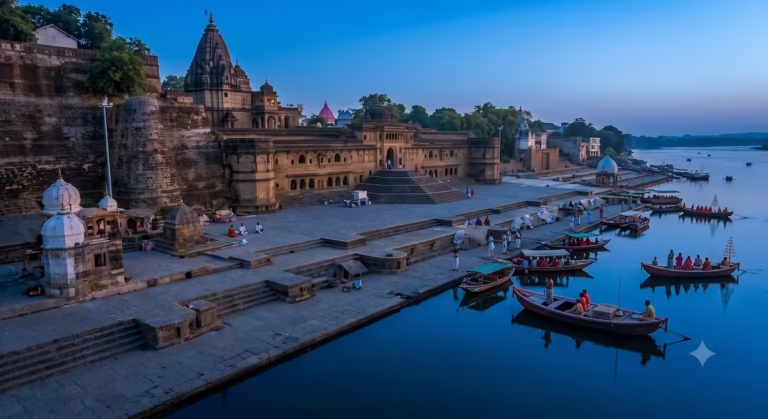
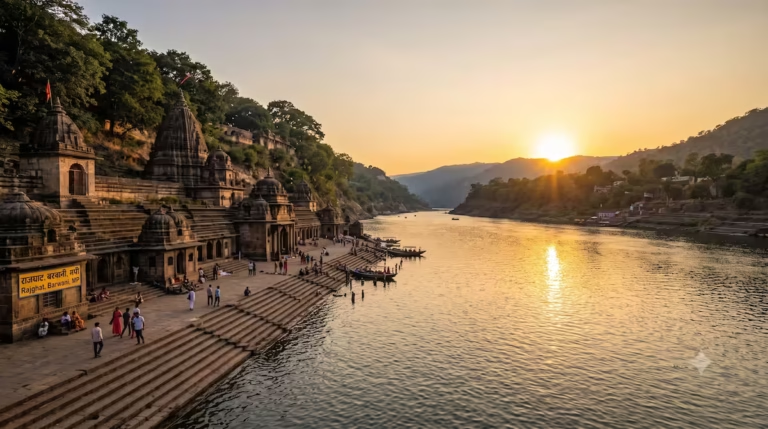
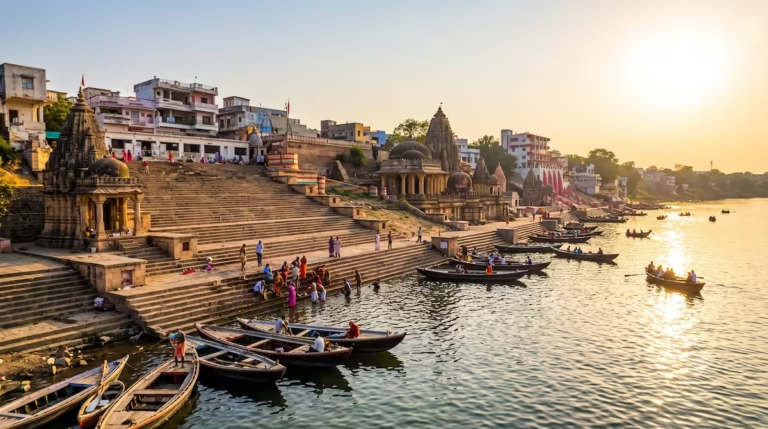
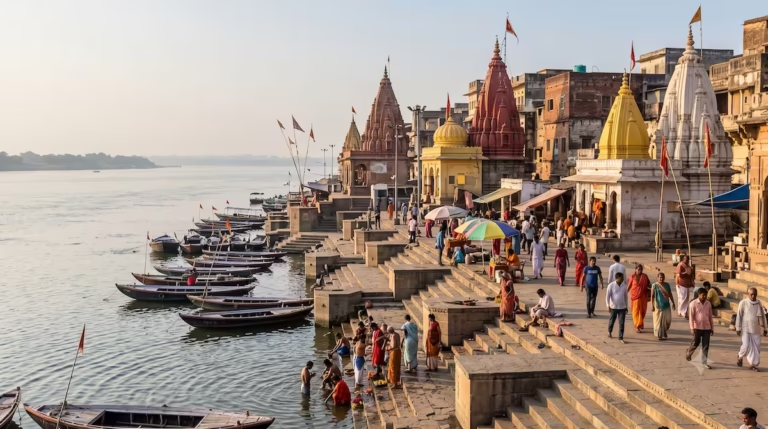
Sethani Ghat is one of the best-known riverfront ghats on the Narmada in Narmadapuram, Madhya Pradesh. The ghat stands on the southern bank of the river and serves as a place for prayer, bathing, religious rituals and evening visits.
The ghat is closely connected with the history of Narmadapuram, formerly known as Hoshangabad. Its broad riverfront, steps and views across the Narmada make it an important part of the town’s religious and cultural life.
For visitors, Sethani Ghat offers a simple way to experience the Narmada within the town. Pilgrims, local devotees and travellers visit throughout the year.
Where Is Sethani Ghat?
Sethani Ghat is located on the Narmada River in Narmadapuram district of Madhya Pradesh. It lies within Narmadapuram town and is easily accessible from the main parts of the city.
The ghat forms part of the Narmada riverfront that runs through the town. Several temples and smaller religious sites are located around the riverfront.
Its location also makes Sethani Ghat a useful stop for visitors travelling between other Narmada pilgrimage centres in Madhya Pradesh.
History of Sethani Ghat
Sethani Ghat was developed through the efforts of a wealthy woman known locally as Sethani. The ghat is traditionally associated with the philanthropic work of Smt. Janki Bai Sethani.
The riverfront was developed to provide a more accessible place for people to reach the Narmada and conduct religious activities.
Over time, Sethani Ghat became one of the recognised landmarks of Narmadapuram. The ghat has continued to serve local residents and pilgrims while remaining an important part of the town’s riverfront.
Its history reflects the role that local philanthropy played in developing public religious spaces along the Narmada.
Religious Significance of Sethani Ghat
Traditional Hindu belief regards the Narmada as a sacred river. Riverfront ghats such as Sethani Ghat provide places where devotees can perform prayers, rituals and other forms of Narmada worship.
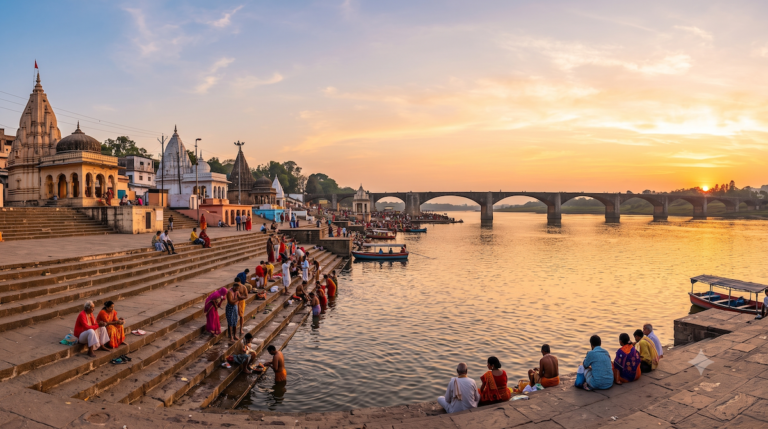
Devotees may visit the ghat for bathing, offering prayers or spending time beside the river. Religious activities can increase during festivals and other auspicious occasions.
The ghat also provides access to the Narmada for people following local traditions connected with river worship.
Beliefs and rituals can differ between communities and families. Visitors should follow local customs when taking part in religious activities.
Narmada Worship at Sethani Ghat
Narmada worship is closely connected with daily religious life in many towns along the river.
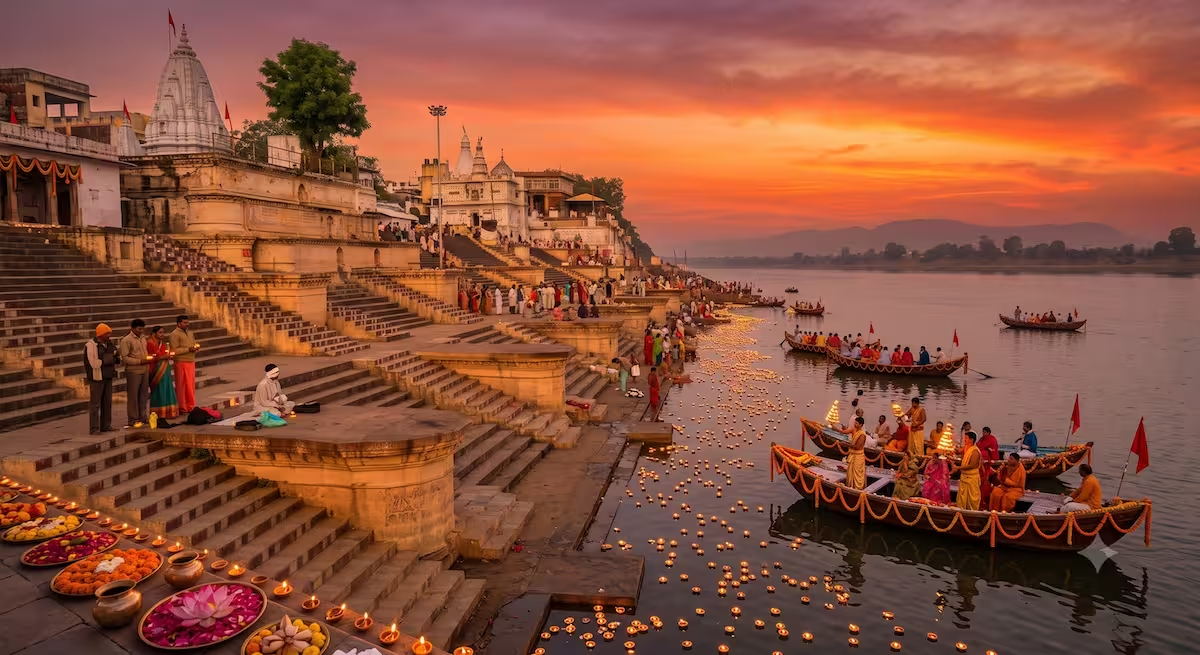
At Sethani Ghat, visitors can observe devotees offering prayers and performing traditional rituals beside the water. Some people visit during the early morning, while others arrive in the evening.
The riverfront becomes more active during religious festivals and special occasions.
Visitors who come mainly for sightseeing should allow space for people performing rituals. Photography should also follow local expectations, particularly during private ceremonies.
Sethani Ghat and Narmada Parikrama
Narmada Parikrama is a traditional pilgrimage around the Narmada. Pilgrims travel along the river while visiting temples, ashrams, ghats and other sacred places.
Narmadapuram is located along the Narmada and has long been associated with pilgrimage and river worship. Sethani Ghat can therefore form part of a visit through the region.
It is not a compulsory stop for every Narmada Parikrama route. Traditional routes can differ depending on the pilgrim’s chosen path, customs and travel method.
Pilgrims travelling through Narmadapuram may visit the ghat as part of their wider journey.
Sethani Ghat During Festivals
Religious activity at Sethani Ghat increases during major Hindu festivals and occasions connected with the Narmada.
Devotees may gather for bathing, prayer and other traditional ceremonies. The riverfront can become crowded during these periods.
Visitors planning a festival visit should allow extra time for traffic and parking. Local arrangements may also affect access to parts of the ghat.
The atmosphere during such occasions can provide a closer view of local Narmada traditions.
Places to Visit Near Sethani Ghat
Narmada Riverfront
The wider riverfront around Narmadapuram provides opportunities for walking, prayer and observing daily activities along the Narmada.
Rewa Kund
Rewa Kund is associated with the Narmada and local religious traditions. It can be included when visiting religious places around Narmadapuram.
Bandrabhan
Bandrabhan is located near the confluence of the Narmada and Tawa rivers. It is another religiously important site in the Narmadapuram region.
Narmadapuram Temples
Several temples and shrines are located in and around the town. These can be combined with a visit to Sethani Ghat.
Best Time to Visit Sethani Ghat
October to March is generally comfortable for visiting Narmadapuram and its outdoor attractions. The cooler weather makes it easier to spend time along the riverfront.
Early morning and evening are suitable for visitors who prefer cooler temperatures.
Summer afternoons can become very hot. Plan outdoor visits during the morning or evening and carry drinking water.
Festival days can attract larger crowds. Check local conditions before planning a visit during major religious occasions.
How to Reach Sethani Ghat
Sethani Ghat is located within Narmadapuram town and can be reached by local roads.
Narmadapuram has rail connections with several cities in Madhya Pradesh and other parts of India. The nearest major airport is Raja Bhoj Airport in Bhopal.
Local taxis, auto-rickshaws and private vehicles can be used for travel within the town.
Travel time depends on the starting point and road conditions.
What to Do at Sethani Ghat
- Spend time beside the Narmada
- Offer prayers according to local tradition
- Observe Narmada worship
- Visit nearby temples and religious sites
- Walk along the riverfront
- Learn about the history of the ghat
- Include Narmadapuram in a wider Narmada pilgrimage journey
Visitors should respect religious activities and keep the riverfront clean. Avoid entering the river when water conditions are unsafe.
Sethani Ghat Travel Tips
Visit during the morning or evening during warmer months.
Carry drinking water and sun protection when visiting during summer.
Arrive early during festivals when the riverfront can become crowded.
Keep personal belongings secure in busy areas.
Follow local instructions regarding bathing and river access.
Avoid throwing plastic, food packaging or other waste into the Narmada.
If you plan to photograph religious ceremonies, ask permission when appropriate.
FAQs About Sethani Ghat
What is Sethani Ghat famous for?
Sethani Ghat is known for its Narmada riverfront, religious activities and historical connection with Narmadapuram. It is a popular place for prayer, bathing and spending time beside the river.
Where is Sethani Ghat located?
Sethani Ghat is located on the Narmada River in Narmadapuram, Madhya Pradesh. The ghat lies within the town and is accessible by local roads.
Who built Sethani Ghat?
The ghat is traditionally associated with Smt. Janki Bai Sethani, whose philanthropic work contributed to its development as a public riverfront space.
What is the religious significance of Sethani Ghat?
Traditional Hindu belief considers the Narmada a sacred river. Devotees visit Sethani Ghat for prayer, bathing, rituals and Narmada worship.
Is Sethani Ghat part of Narmada Parikrama?
Narmadapuram lies along the Narmada and can be visited by Parikrama pilgrims. Sethani Ghat may form part of a pilgrim’s journey, but it is not a compulsory stop on every route.
What can I visit near Sethani Ghat?
Visitors can explore the Narmada riverfront, nearby temples, Rewa Kund and Bandrabhan while visiting the Narmadapuram region.
Explore More Narmada Guides
Continue your journey with our guides to Narmada Ghats, Narmada Pilgrimage Places, Narmada Parikrama Route, Narmada Parikrama Rules, Narmada Ashrams and Narmada Sangams.