Must-Visit Ghats on the Narmada: 20 Sacred Riverfronts
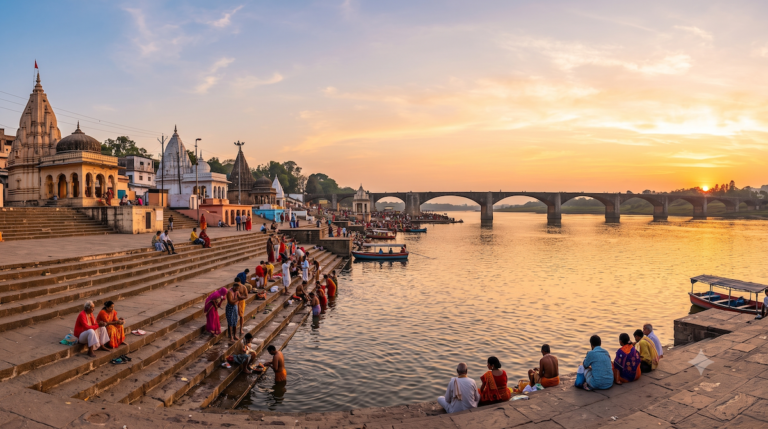
The Narmada River flows through Madhya Pradesh, Maharashtra and Gujarat before reaching the Arabian Sea. Along its course, many towns have developed riverfront ghats where people gather for prayer, bathing, rituals and Narmada Aarti.
These ghats form an important part of the cultural and religious life of the Narmada.
Some are located in large cities such as Jabalpur and Narmadapuram. Others form part of major pilgrimage destinations such as Omkareshwar and Maheshwar.
For pilgrims undertaking Narmada Parikrama, these riverfronts provide places to pause, pray and connect with the river.
Why Are Narmada Ghats Important?
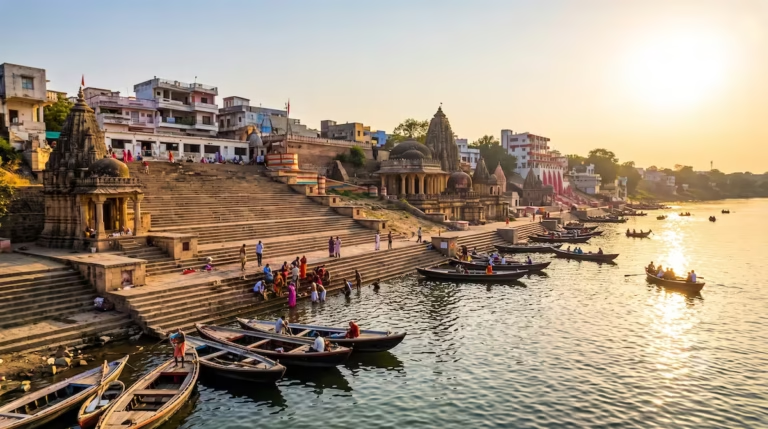
A ghat is a riverfront area, often built with steps leading down to the water.
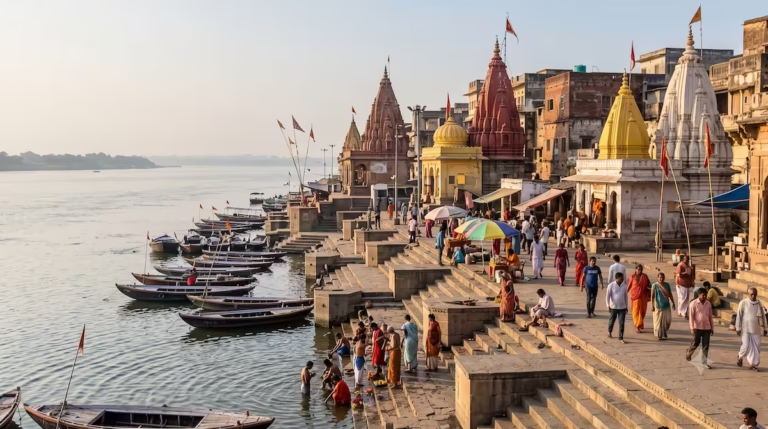
Narmada ghats have traditionally served several purposes. Devotees visit them for prayers, ritual bathing and offerings. Local communities also use them during festivals and religious ceremonies.
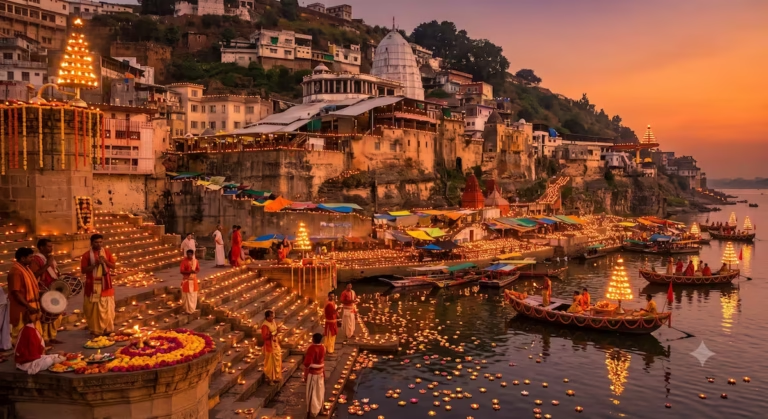
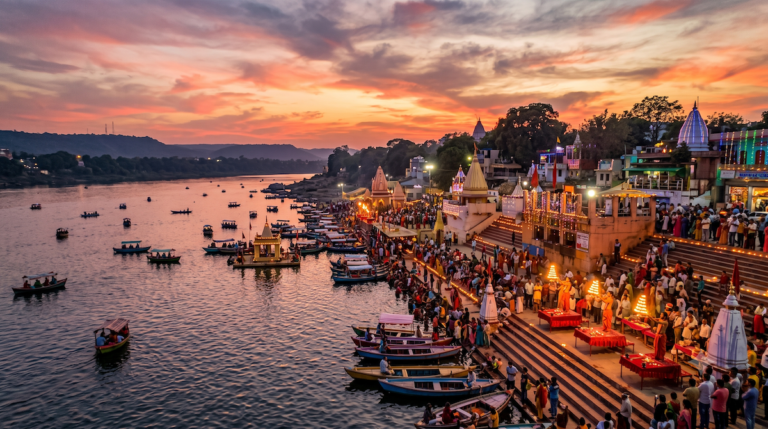
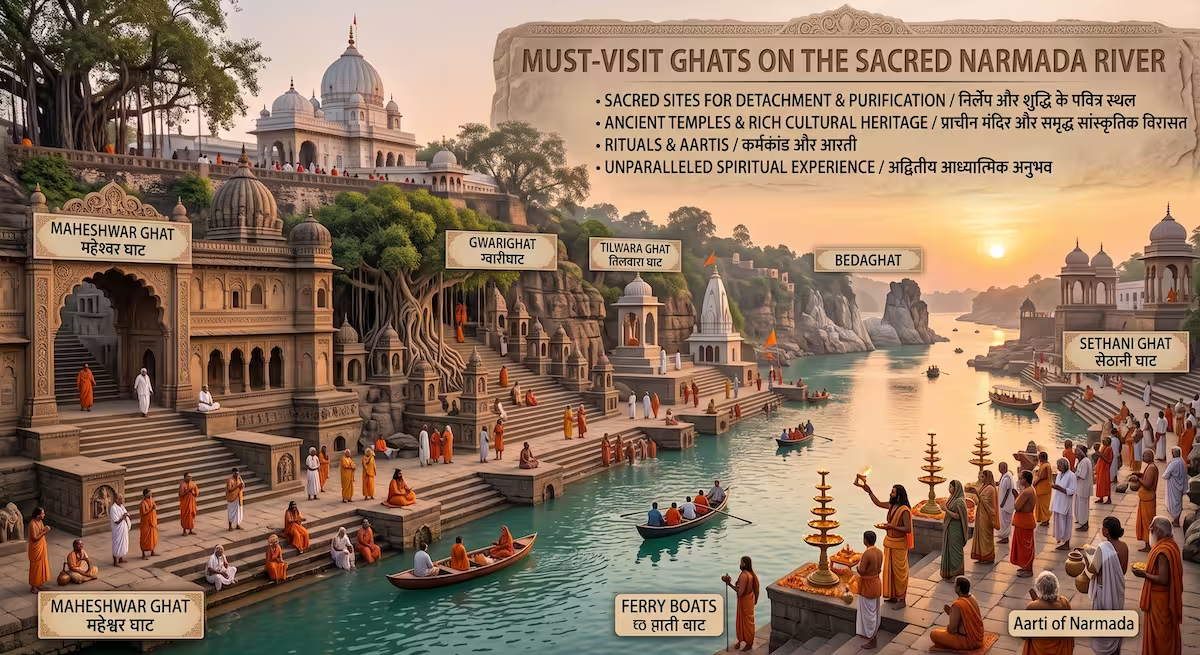
Many ghats become especially active during sunrise and sunset. Narmada Aarti is performed at several important riverfront locations.
The ghats also reflect the history of settlements along the river. Old temples, stone steps, shrines and other structures can often be found around them.
For Narmada Parikrama pilgrims, ghats can also provide places for rest, prayer and river worship during the journey.
Famous Ghats on the Narmada
Narmada Udgam Ghat, Amarkantak
Narmada Udgam is located at the traditional source of the Narmada in Amarkantak.
The Narmada Kund is regarded by tradition as the place from which the river emerges. The surrounding complex contains temples and shrines connected with the Narmada.
Pilgrims visiting Amarkantak often begin their journey from this sacred source area.
Narmada Udgam is therefore one of the most important riverfront sites associated with the Narmada tradition.
Amarkantak itself is a major pilgrimage centre. The Narmada Udgam area should be understood as the sacred source and river origin site within that larger destination.
Gwarighat, Jabalpur
Gwarighat is one of the best-known Narmada riverfronts in Jabalpur.
The ghat is closely associated with Narmada worship and evening Aarti. Devotees gather here for prayers, rituals and other religious activities.
The riverfront becomes particularly atmospheric around sunset when lamps and devotional ceremonies take place.
Gwarighat is also an accessible place for visitors who want to experience the Narmada without travelling far from Jabalpur city.
Tilwara Ghat, Jabalpur
Tilwara Ghat is another historic riverfront on the Narmada near Jabalpur.
The ghat has religious importance and remains connected with the wider cultural history of the Narmada in the region.
It is a useful stop for visitors exploring the riverfront sites around Jabalpur.
Gwarighat and Tilwara Ghat can be visited together as part of a Narmada-focused itinerary around the city.
Sethani Ghat, Narmadapuram
Sethani Ghat is one of the most prominent riverfronts in Narmadapuram.
The ghat has broad steps leading towards the Narmada. Devotees visit the riverfront for prayer, bathing and religious ceremonies.
The ghat becomes busier during festivals and important religious occasions.
Narmadapuram has a long connection with Narmada worship. Sethani Ghat remains an important part of the city’s riverfront identity.
Koti Tirtha Ghat, Omkareshwar
Koti Tirtha is an important sacred riverfront area at Omkareshwar.
Omkareshwar stands around Mandhata Island in the Narmada and is one of the major Shaiva pilgrimage destinations in India.
Several ghats and river access points are located around the island and temple area.
Koti Tirtha is therefore best understood as one of the important ghats within the larger Omkareshwar pilgrimage centre.
Ahilya Ghat, Maheshwar
Ahilya Ghat forms part of the historic Narmada riverfront at Maheshwar.
Maheshwar is known for its temples, fort, stone architecture and long series of riverfront ghats.
The development of Maheshwar’s riverfront is strongly associated with the reign of Ahilyabai Holkar.
Visitors can walk along the ghats, view the temples and observe daily religious activity beside the river.
The Maheshwar riverfront is one of the most visually distinctive stretches along the Narmada.
Ghats of Mandleshwar
Mandleshwar has a historic riverfront with several places where pilgrims and residents access the Narmada.
The town has long been connected with Narmada worship and pilgrimage.
Its ghats are used for prayer, bathing and religious ceremonies.
Mandleshwar is also located along traditional Narmada pilgrimage routes, making its riverfront relevant to Parikrama travellers.
Rajghat, Barwani
Rajghat is a recognised riverfront location along the Narmada near Barwani.
The ghat provides access to the river and is associated with local religious activity.
Barwani lies in the western part of Madhya Pradesh, where the Narmada passes through a region known for its tribal culture, historic settlements and religious sites.
Rajghat can be considered as part of the wider Narmada riverfront in this section of the river.
Ghats of Chandod
Chandod has several riverfront ghats connected with its long religious tradition.
The town lies near an important river confluence and attracts pilgrims visiting its temples and sacred sites.
The riverfront is used for prayer, bathing and traditional religious ceremonies.
Rather than treating Chandod as one single ghat, it is more accurate to refer to the ghats of Chandod as a group of riverfront sites.
Karnali Ghat
Karnali is a religious settlement on the Narmada in Gujarat.
Its riverfront is associated with pilgrims visiting the Kuber Bhandari Temple and other religious sites.
The ghat provides direct access to the Narmada and forms part of the wider pilgrimage experience at Karnali.
Bharuch Ghats
Bharuch has a long relationship with the lower Narmada.
The city contains riverfront areas where people gather for religious activities and to experience the river.
Bharuch has also played an important role in the history of trade and settlement along the lower Narmada.
Its location near the Narmada estuary gives the riverfront a distinct character compared with the ghats further upstream.
Narmada Ghats by Region
| Region | Important Ghats |
|---|---|
| Amarkantak | Narmada Udgam |
| Jabalpur | Gwarighat, Tilwara Ghat |
| Narmadapuram | Sethani Ghat |
| Omkareshwar | Koti Tirtha and other riverfront ghats |
| Maheshwar | Ahilya Ghat and Maheshwar riverfront |
| Mandleshwar | Mandleshwar riverfront ghats |
| Barwani | Rajghat |
| Chandod | Chandod riverfront ghats |
| Karnali | Karnali riverfront |
| Bharuch | Bharuch riverfront |
Narmada Ghats for Aarti
Narmada Aarti is performed at several important riverfront locations.
Gwarighat in Jabalpur is particularly known for its evening Narmada Aarti. Devotees gather near the river as priests perform prayers with lamps.
Omkareshwar and Maheshwar also have established traditions of river worship and evening prayers.
Aarti timings can vary by season, festival and local practice. Visitors should check the local schedule before planning their visit.
During an Aarti, visitors should follow local customs and avoid disturbing devotees.
Narmada Ghats Important for Parikrama
Narmada Parikrama follows the river through many towns and settlements.
Not every ghat is a mandatory stop. Different traditions and individual pilgrims may follow different daily stages.
Some riverfronts are nevertheless useful reference points along the route.
| Ghat | Location | Role for Pilgrims |
|---|---|---|
| Narmada Udgam | Amarkantak | Traditional source of the Narmada |
| Gwarighat | Jabalpur | River worship and Aarti |
| Tilwara Ghat | Jabalpur | Historic Narmada riverfront |
| Sethani Ghat | Narmadapuram | Prayer and river rituals |
| Koti Tirtha | Omkareshwar | Sacred riverfront near the temple area |
| Ahilya Ghat | Maheshwar | Historic riverfront and religious activity |
| Mandleshwar Ghats | Mandleshwar | River worship and pilgrimage |
| Rajghat | Barwani | River access in western Madhya Pradesh |
| Chandod Ghats | Chandod | River worship and pilgrimage |
| Karnali Riverfront | Karnali | Religious activities near Kuber Bhandari |
| Bharuch Ghats | Bharuch | Lower Narmada riverfront |
Best Time to Visit Narmada Ghats
The cooler months from October to March are generally comfortable for visiting Narmada riverfronts.
Early morning is suitable for quiet walks, prayer and photography. Evening offers a different experience at ghats where Narmada Aarti takes place.
Summer temperatures can become high in parts of Madhya Pradesh and Gujarat. Visitors should plan outdoor visits around the cooler hours of the day.
During festivals, the ghats can become much busier. Pilgrims should allow extra time and follow local instructions.
How to Visit Narmada Ghats Respectfully
Narmada ghats are active religious spaces rather than ordinary tourist attractions.
Dress modestly when visiting temples and religious areas. Follow local rules regarding bathing and photography.
Do not enter restricted areas during ceremonies.
Avoid leaving plastic, food waste or other rubbish near the river.
If you attend Narmada Aarti, maintain a respectful distance and avoid obstructing devotees.
These simple practices help protect the riverfront and respect local traditions.
Frequently Asked Questions About Narmada Ghats
Which are the most famous ghats on the Narmada?
Gwarighat, Tilwara Ghat, Sethani Ghat, Koti Tirtha, Ahilya Ghat and Rajghat are among the better-known Narmada riverfronts. The river also has many smaller ghats across Madhya Pradesh and Gujarat.
Which Narmada ghat is famous for Aarti?
Gwarighat in Jabalpur is particularly known for Narmada Aarti. Evening prayers attract devotees and visitors to the riverfront. Other major Narmada pilgrimage centres also hold river worship ceremonies.
Which ghat is associated with Ahilyabai Holkar?
The riverfront ghats of Maheshwar are strongly associated with Ahilyabai Holkar and the development of the historic town. Ahilya Ghat is one of the recognised ghats along this riverfront.
Which Narmada ghats are near Omkareshwar Temple?
Several ghats and river access points are located around Mandhata Island and the Omkareshwar temple area. Koti Tirtha is one of the important sacred riverfront areas.
Where does Narmada Parikrama begin?
Many traditional Narmada Parikrama routes begin at Amarkantak, near the traditional source of the river. Route practices can differ between traditions.
Where does the Narmada reach the sea?
The Narmada flows west through Madhya Pradesh and Gujarat before entering the Gulf of Khambhat. The lower river eventually reaches the Arabian Sea.
Explore the Narmada Beyond Its Ghats
The ghats offer one way to experience the Narmada, but the river’s pilgrimage tradition extends much further.
Continue your journey through our guides to Narmada Parikrama, the Narmada Parikrama route, Narmada Parikrama rules, Narmada ashrams and Narmada sangams.