Shri Narmada Ashtakam: Sanskrit, Hindi Meaning & English
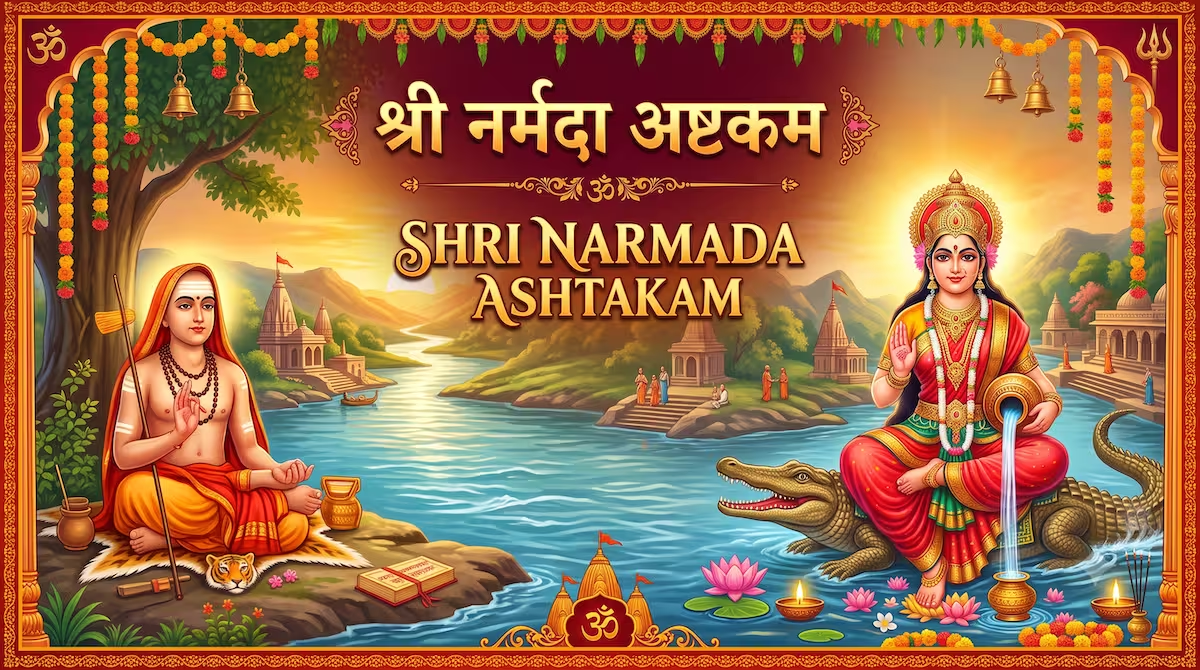
Shri Narmada Ashtakam is a sacred Sanskrit hymn dedicated to Maa Narmada. Traditionally attributed to Adi Shankaracharya, the hymn praises the spiritual importance of the Narmada River and seeks the blessings of the divine mother. Devotees recite it as part of Narmada worship, pilgrimage and spiritual practice.
This page presents the Narmada Ashtakam in Sanskrit, transliteration, Hindi meaning and English translation. The final verse is the traditional phalaśruti, which describes the devotional benefits associated with reciting the hymn.
श्री नर्मदाष्टकम्
रचयिता: आदि शंकराचार्य परंपरा से संबद्ध
श्लोक 1
Sanskrit
सबिन्दुसिन्धुसुस्खलत्तरङ्गभङ्गरञ्जितं
द्विषत्सु पापजातजातकादिवारिसंयुतम् ।
कृतान्तदूतकालभूतभीतिहारिवर्मदे
त्वदीयपादपङ्कजं नमामि देवि नर्मदे ॥१॥
Transliteration
Sabindu-sindhu-suskhalat-taraṅga-bhaṅga-rañjitaṃ
Dviṣatsu pāpa-jāta-jātakādi-vāri-saṃyutam |
Kṛtānta-dūta-kāla-bhūta-bhīti-hāri-varmade
Tvadīya-pāda-paṅkajaṃ namāmi Devi Narmade || 1 ||
सरल हिंदी अर्थ
हे देवी नर्मदे, आपकी जलधारा सुंदर बूंदों और चंचल लहरों से शोभित होती है। आपकी पवित्र धारा को पापों का नाश करने वाली माना गया है। जो आपकी शरण लेते हैं, उनके मृत्यु और भय से जुड़े कष्ट दूर होते हैं। हे नर्मदा माता, मैं आपके चरण कमलों को प्रणाम करता हूँ।
English Meaning
O Devi Narmada, your flowing waters are adorned with sacred drops and playful waves. Your holy waters are traditionally believed to cleanse devotees of sins. You offer protection from fear associated with death and worldly suffering. O Mother Narmada, I bow to your lotus feet.
श्लोक 2
Sanskrit
त्वदम्बुलीनदीनमीनदिव्यसम्प्रदायकं
कलौ मलौघभारहारि सर्वतीर्थनायकम् ।
सुमच्छकच्छनक्रचक्रवाकचक्रशर्मदे
त्वदीयपादपङ्कजं नमामि देवि नर्मदे ॥२॥
Transliteration
Tvad-ambu-līna-dīna-mīna-divya-sampradāyakaṃ
Kalau malaugha-bhāra-hāri sarva-tīrtha-nāyakam |
Sumaccha-kaccha-nakra-cakrāvāka-cakra-śarmade
Tvadīya-pāda-paṅkajaṃ namāmi Devi Narmade || 2 ||
सरल हिंदी अर्थ
हे माँ नर्मदे, आपकी जलधारा में रहने वाले जीवों को भी आपकी पवित्रता का स्पर्श प्राप्त होता है। कलियुग के पापों का भार हरने वाली और सभी तीर्थों में श्रेष्ठ मानी जाने वाली नर्मदा माता को प्रणाम है। मछलियों, कछुओं, मगरमच्छों और जलपक्षियों को सुख देने वाली हे देवी, मैं आपके चरण कमलों को प्रणाम करता हूँ।
English Meaning
O Mother Narmada, even the creatures dwelling in your sacred waters receive your divine grace. You are traditionally revered as a foremost among holy rivers and as a remover of the burden of sins in the Kali Yuga. You provide shelter and happiness to aquatic creatures and birds. I bow to your lotus feet.
श्लोक 3
Sanskrit
महागभीरनीरपूरपापधूतभूतलं
ध्वनत्समस्तपातकारिदारितापदाचलम् ।
जगल्लये महाभये मृकण्डुसूनुहर्म्यदे
त्वदीयपादपङ्कजं नमामि देवि नर्मदे ॥३॥
Transliteration
Mahā-gabhīra-nīra-pūra-pāpa-dhūta-bhūtalaṃ
Dhvanaṭ-samasta-pātakāri-dāritāpada-acalam |
Jagad-laye mahā-bhaye Mṛkaṇḍu-sūnu-harmyade
Tvadīya-pāda-paṅkajaṃ namāmi Devi Narmade || 3 ||
सरल हिंदी अर्थ
हे माँ नर्मदे, आपकी गहरी और जल से परिपूर्ण धारा पृथ्वी को पवित्र करने वाली मानी जाती है। आपकी धारा की गूंज सभी पापों और कष्टों को दूर करने वाली कही गई है। महान संकट के समय भी आप भक्तों को आश्रय देती हैं। हे देवी नर्मदे, मैं आपके चरण कमलों को प्रणाम करता हूँ।
English Meaning
O Mother Narmada, your deep and abundant waters are praised as purifying the earth. The sound of your flowing waters is traditionally associated with the removal of sins and suffering. You provide refuge during times of great fear and difficulty. I bow to your lotus feet.
श्लोक 4
Sanskrit
गतं तदैव मे भयं त्वदम्बु वीक्षितं यदा
मृकण्डुसूनुशौनकासुरारिसेवितं सदा ।
पुनर्भवाब्धिजन्मजं भवाब्धिदुःखवर्मदे
त्वदीयपादपङ्कजं नमामि देवि नर्मदे ॥४॥
Transliteration
Gataṃ tadaiva me bhayaṃ tvad-ambu vīkṣitaṃ yadā
Mṛkaṇḍu-sūnu-Śaunaka-asurāri-sevitaṃ sadā |
Punar-bhavābdhi-janmajaṃ bhavābdhi-duḥkha-varmade
Tvadīya-pāda-paṅkajaṃ namāmi Devi Narmade || 4 ||
सरल हिंदी अर्थ
हे माँ नर्मदे, आपके पवित्र जल के दर्शन मात्र से मेरा भय दूर हो जाता है। ऋषि-मुनियों और देवताओं द्वारा पूजित आपकी धारा संसार और पुनर्जन्म से जुड़े दुखों से रक्षा करने वाली मानी गई है। हे देवी नर्मदे, मैं आपके चरण कमलों को प्रणाम करता हूँ।
English Meaning
O Mother Narmada, when I behold your sacred waters, my fear is said to disappear. Your river is revered by sages and divine beings and is regarded as a source of protection from the suffering associated with worldly existence and rebirth. I bow to your lotus feet.
श्लोक 5
Sanskrit
अलक्ष्यलक्षकिन्नरामरासुरादिपूजितं
सुलक्षणीरतीरधीरपक्षिलक्षकूजितम् ।
वसिष्ठशिष्टपिप्पलादिकर्दमादिशर्मदे
त्वदीयपादपङ्कजं नमामि देवि नर्मदे ॥५॥
Transliteration
Alakṣya-lakṣa-kinnarāmarāsurādi-pūjitaṃ
Sulakṣaṇīra-tīra-dhīra-pakṣi-lakṣa-kūjitam |
Vasiṣṭha-śiṣṭa-Pippalāda-Kardamādi-śarmade
Tvadīya-pāda-paṅkajaṃ namāmi Devi Narmade || 5 ||
सरल हिंदी अर्थ
हे माँ नर्मदे, असंख्य किन्नर, देवता और अन्य दिव्य शक्तियाँ आपकी पूजा करती हैं। आपके सुंदर तट पक्षियों की मधुर ध्वनियों से गूंजते हैं। वशिष्ठ, पिप्पलाद और अन्य ऋषियों से जुड़ी पवित्र परंपराओं में आपकी महिमा का वर्णन मिलता है। हे देवी, मैं आपके चरण कमलों को प्रणाम करता हूँ।
English Meaning
O Mother Narmada, countless celestial beings and divine forces are described as worshipping you. Your beautiful riverbanks resound with the calls of birds. Your sacred tradition is associated with revered sages such as Vashishtha and Pippalada. O Devi Narmada, I bow to your lotus feet.
श्लोक 6
Sanskrit
सनत्कुमारनाचिकेतकाश्यपात्रिषट्पदैः
धृतं स्वकीयमानसेषु नारदादिषट्पदैः ।
रवीन्दुरन्तिदेवदेवराजकर्मशर्मदे
त्वदीयपादपङ्कजं नमामि देवि नर्मदे ॥६॥
Transliteration
Sanatkumāra-Nāciketa-Kāśyapa-ātri-ṣaṭpadaiḥ
Dhṛtaṃ svakīya-mānaseṣu Nārada-ādi-ṣaṭpadaiḥ |
Ravīndu-Rantideva-Devarāja-karma-śarmade
Tvadīya-pāda-paṅkajaṃ namāmi Devi Narmade || 6 ||
सरल हिंदी अर्थ
हे नर्मदा माता, सनत्कुमार, नचिकेता, कश्यप, अत्रि, नारद और अन्य महान ऋषियों के मन में आपकी पवित्र स्मृति स्थापित है। सूर्य, चंद्रमा, देवताओं और पुण्य कर्मों से जुड़ी आपकी महिमा भक्तों को शांति प्रदान करती है। मैं आपके चरण कमलों को प्रणाम करता हूँ।
English Meaning
O Mother Narmada, your sacred presence is remembered in the spiritual traditions associated with Sanatkumara, Nachiketa, Kashyapa, Atri, Narada and other revered sages. Your glory is connected with the sun, moon, divine beings and righteous actions. I bow to your lotus feet.
श्लोक 7
Sanskrit
अलक्षलक्षलक्षपापलक्षसारसायुधं
ततस्तु जीवजन्तुतन्तुभुक्तिमुक्तिदायकम् ।
विरिञ्चिविष्णुशङ्करस्वकीयधामवर्मदे
त्वदीयपादपङ्कजं नमामि देवि नर्मदे ॥७॥
Transliteration
Alakṣa-lakṣa-lakṣa-pāpa-lakṣa-sārasa-āyudhaṃ
Tatas-tu jīva-jantu-tantu-bhukti-mukti-dāyakam |
Viriñci-Viṣṇu-Śaṅkara-svakīya-dhāma-varmade
Tvadīya-pāda-paṅkajaṃ namāmi Devi Narmade || 7 ||
सरल हिंदी अर्थ
हे माँ नर्मदे, आपकी पवित्र धारा असंख्य पापों का नाश करने वाली मानी गई है। आपके तट पर रहने वाले जीवों को भौतिक सुख और आध्यात्मिक मुक्ति दोनों प्रदान करने वाली आपकी महिमा गाई जाती है। ब्रह्मा, विष्णु और शंकर से जुड़े आपके पवित्र धाम भक्तों के लिए सुरक्षा और आश्रय का स्थान हैं। मैं आपके चरण कमलों को प्रणाम करता हूँ।
English Meaning
O Mother Narmada, your sacred waters are praised as capable of cleansing countless sins. Your holy banks are described as granting both worldly well-being and spiritual liberation to living beings who seek your grace. Your sacred abode is associated with Brahma, Vishnu and Shiva and is regarded as a place of refuge. I bow to your lotus feet.
श्लोक 8
Sanskrit
अहो धृतं स्वनं श्रुतं महेशकेशजातटे
किरातसूतवाडवेषु पण्डिते शठे नटे ।
दुरन्तपापतापहारिसर्वजन्तुशर्मदे
त्वदीयपादपङ्कजं नमामि देवि नर्मदे ॥८॥
Transliteration
Aho dhṛtaṃ svanaṃ śrutaṃ Maheśa-keśa-jā-taṭe
Kirāta-sūta-vāḍaveṣu paṇḍite śaṭhe naṭe |
Duranta-pāpa-tāpa-hāri sarva-jantu-śarmade
Tvadīya-pāda-paṅkajaṃ namāmi Devi Narmade || 8 ||
सरल हिंदी अर्थ
हे माँ नर्मदे, आपकी धारा का पवित्र नाद भगवान महेश के जटाजूट से जुड़ी दिव्य परंपरा की स्मृति कराता है। आपके तट पर विभिन्न वर्गों और जीवन स्थितियों के लोग आपकी शरण पाते हैं। आप सभी जीवों के पाप और दुख दूर करके शांति प्रदान करने वाली मानी जाती हैं। हे देवी नर्मदे, मैं आपके चरण कमलों को प्रणाम करता हूँ।
English Meaning
O Mother Narmada, the sacred sound of your flowing waters evokes the divine tradition associated with Lord Mahesha. People of different backgrounds and circumstances find refuge on your banks. You are praised as a giver of peace who removes the suffering and spiritual burden of all living beings. I bow to your lotus feet.
फलश्रुति
Sanskrit
इदं तु नर्मदाष्टकं त्रिकालमेव ये सदा
पठन्ति ते निरन्तरं न यान्ति दुर्गतिं कदा ।
सुलभ्य देहदुर्लभं महेशधामगौरवं
पुनर्भवा नरा न वै विलोकयन्ति रौरवम् ॥९॥
Transliteration
Idaṃ tu Narmadāṣṭakaṃ trikālam eva ye sadā
Paṭhanti te nirantaraṃ na yānti durgatiṃ kadā |
Sulabhya deha-durlabhaṃ Maheśa-dhāma-gauravam
Punarbhavā narā na vai vilokayanti Rauravam || 9 ||
सरल हिंदी अर्थ
जो व्यक्ति इस नर्मदाष्टकम् का नियमित रूप से तीनों समय पाठ करते हैं, वे कभी दुर्गति को प्राप्त नहीं होते, ऐसी भक्तिपरंपरा में मान्यता है। उन्हें महेश के धाम की दुर्लभ प्राप्ति का पुण्य मिलता है और पुनर्जन्म के दुखों से मुक्ति प्राप्त होती है।
English Meaning
According to the devotional tradition, those who regularly recite this Narmadāṣṭakam three times a day are protected from misfortune. They are believed to attain the rare spiritual merit associated with the abode of Mahesha and to become free from the suffering of repeated birth.
॥ इति श्रीनर्मदाष्टकं सम्पूर्णम् ॥
ॐ श्री नर्मदायै नमः।
नर्मदे हर। नर्मदे हर।
FAQs
What is Narmada Ashtakam?
Narmada Ashtakam is a Sanskrit devotional hymn dedicated to Maa Narmada. It contains eight principal verses praising the sacred river, followed by a concluding phalaśruti describing the traditional spiritual benefits of reciting the hymn.
Who wrote Narmada Ashtakam?
Narmada Ashtakam is traditionally attributed to Adi Shankaracharya. Different printed and oral traditions may contain minor variations in wording and presentation.
What is the meaning of Narmada Ashtakam?
The hymn praises Maa Narmada as a sacred and spiritually powerful river. It describes her waters and banks as sources of purification, protection, peace and spiritual liberation according to Hindu devotional tradition.
When should Narmada Ashtakam be recited?
Devotees may recite Narmada Ashtakam during daily worship, meditation, visits to the Narmada River, and Narmada Parikrama. The phalaśruti specifically refers to recitation three times a day.
Can Narmada Ashtakam be recited during Narmada Parikrama?
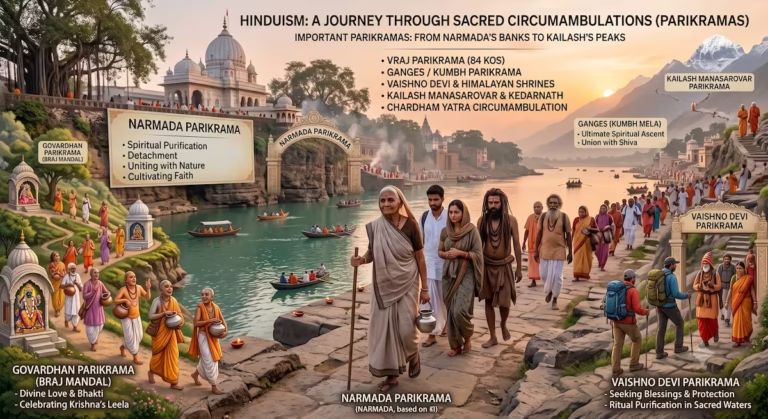
Yes. Devotees undertaking Narmada Parikrama may include Narmada Ashtakam in their daily prayers and worship according to their personal tradition.
What is the meaning of “Narmade Har”?
“Narmade Har” is a traditional devotional greeting associated with Maa Narmada. Devotees use it as an expression of reverence and remembrance of the sacred river.
Is Narmada Ashtakam the same as Narmada Chalisa?
No. Narmada Ashtakam and Narmada Chalisa are different devotional compositions. Narmada Ashtakam is a Sanskrit hymn traditionally attributed to Adi Shankaracharya, while Narmada Chalisa is a separate devotional text.
What is the phalaśruti of Narmada Ashtakam?
The ninth and concluding verse describes the traditional spiritual benefits believed to come from regularly reciting the hymn. These include protection from misfortune and spiritual liberation.