Narmada Udgam Ghat Amarkantak: History, Religious Significance and Narmada River
Narmada Udgam Ghat is located at Amarkantak in Anuppur district, Madhya Pradesh. It is associated with the traditional source of the Narmada River.
Amarkantak is an important Hindu pilgrimage centre where the Vindhya and Satpura ranges meet. The area contains several temples, kunds and sacred sites connected with the Narmada.
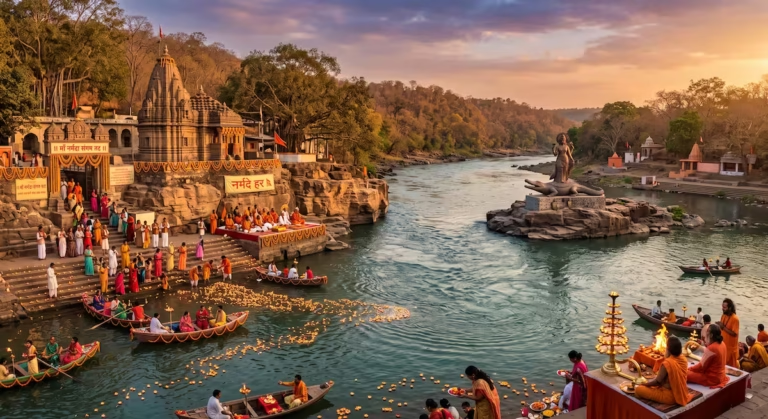
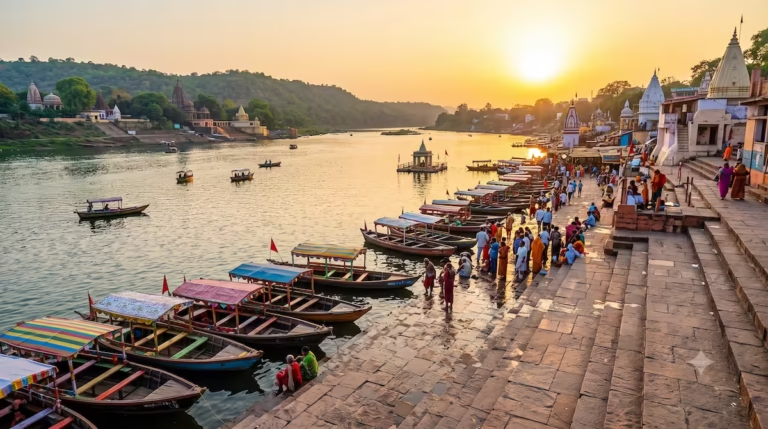
Narmada Udgam Ghat forms an important part of the pilgrimage experience at the river’s source. Devotees visit the site for prayer, worship and rituals connected with Narmada Mata.
Where Is Narmada Udgam Ghat?
Narmada Udgam Ghat is located within the Narmada Udgam Temple complex at Amarkantak in Madhya Pradesh.
Amarkantak lies at an elevation of about 1,000 metres and forms part of the Maikal range. The town is surrounded by forested hills and is known for several important religious sites.
The Narmada Udgam Temple and the associated kund mark the traditional source area of the Narmada.
The river begins its eastward journey from Amarkantak before flowing through Madhya Pradesh and Gujarat towards the Arabian Sea.
History of Narmada Udgam Ghat
Amarkantak has been a pilgrimage centre for centuries. Its religious importance grew around the Narmada’s traditional source and the many temples established in the area.
The region has connections with different dynasties and religious traditions. Ancient temples at Amarkantak include the Kalachuri-era temples built during the 11th century.
The Kalachuri rulers of Tripuri are associated with several temple structures at Amarkantak. The Archaeological Survey of India protects a group of ancient temples in the area.
Narmada Udgam Ghat forms part of the modern religious setting around the traditional source of the river.
The exact history of the present ghat structure differs from the much older religious history of Amarkantak. Visitors should distinguish the history of the site from traditional accounts about the origin of the Narmada.
Religious Significance of Narmada Udgam Ghat
Traditional Hindu belief regards the Narmada as one of India’s sacred rivers.
Amarkantak holds special importance because Hindu tradition identifies it as the origin of the Narmada. Devotees regard the Narmada as a sacred goddess and visit the source area to offer prayers.
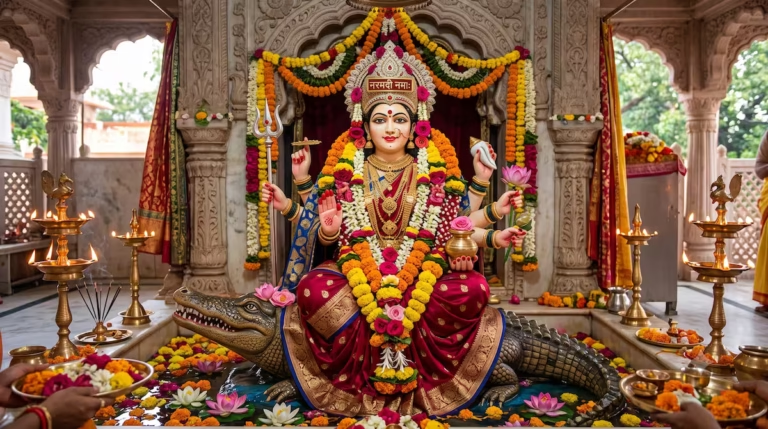
The Narmada Udgam Temple is dedicated to Narmada Mata. The temple complex contains the kund associated with the traditional origin of the river.
Religious tradition also associates Amarkantak with Lord Shiva and several other deities. The town contains many temples and sacred sites within a relatively small area.
These religious beliefs form part of Hindu tradition and should be understood separately from geographical and scientific descriptions of the river’s headwaters.
Narmada Udgam Kund
Narmada Udgam Kund is one of the most important religious sites at Amarkantak.
The kund is located inside the Narmada Udgam Temple complex. Devotees worship the Narmada at this sacred water body and consider it the starting point of the river’s earthly journey.
The site has a strong connection with Narmada worship. Pilgrims commonly visit the kund before exploring other temples and sacred places around Amarkantak.
The water seen at the kund represents the traditional source of the Narmada. The wider hydrological source system of the river involves springs and drainage from the Amarkantak plateau.
Narmada Udgam Ghat and Narmada Worship
Narmada worship at Amarkantak begins with reverence for the river at its source.
Devotees visit the Udgam Temple, offer prayers and perform traditional rituals. The riverfront and temple area provide a setting for quiet worship.
Narmada Aarti and other religious activities may take place at the source area according to local arrangements and festival schedules.
Religious activity can increase during festivals such as Narmada Jayanti and Mahashivratri.
Visitors should follow temple rules and local instructions during religious ceremonies.
Narmada Udgam Ghat and Narmada Parikrama
Narmada Parikrama is a traditional pilgrimage around the Narmada River.
Many pilgrims begin their Parikrama at Amarkantak because of its association with the source of the Narmada. They offer prayers at the Udgam before starting the long pilgrimage along the river.
Traditional Parikrama practices vary. Some pilgrims follow strict walking traditions, while others follow different local customs and route arrangements.
The starting and ending rituals can also differ between pilgrimage traditions.
Narmada Udgam Ghat is therefore closely connected with the spiritual beginning of many Narmada Parikrama journeys.
Narmada Udgam Ghat and the Source of the Narmada
The Narmada rises from the Amarkantak region of eastern Madhya Pradesh.
The river then flows westward through Madhya Pradesh before entering Gujarat. It eventually reaches the Gulf of Khambhat.
The traditional source at Amarkantak has religious importance far beyond the physical size of the initial water flow.
For devotees, the Udgam represents the sacred beginning of Narmada Mata’s journey. For geography, the Amarkantak plateau contains the headwater system from which the river develops.
Both perspectives can be understood without treating religious tradition as scientific evidence.
Temples Near Narmada Udgam Ghat
Several important temples are located near the Narmada source.
Narmada Udgam Temple
The Narmada Udgam Temple is the main shrine associated with the river’s traditional source. The temple complex contains the Udgam Kund and attracts pilgrims throughout the year.
Ancient Temples of Kalachuri Period
Amarkantak has a group of ancient temples associated with the Kalachuri period. Their stone architecture provides evidence of the area’s long history as a religious centre.
Shri Yantra Temple
Shri Yantra Temple is another important religious attraction in Amarkantak. Its distinctive structure makes it one of the prominent modern temple sites in the town.
Pataleshwar Mahadev Temple
Pataleshwar Mahadev is associated with the Shiva tradition of Amarkantak. It can be included in a wider visit to the town’s religious sites.
Places to Visit Near Narmada Udgam Ghat
Amarkantak has several religious and natural attractions.
Sonmuda
Sonmuda is associated with the source of the Son River. It provides views over the surrounding hills and forested region.
Kapildhara
Kapildhara is a waterfall on the Narmada downstream from Amarkantak. The site is associated with religious traditions and attracts visitors throughout the year.
Dugdhdhara
Dugdhdhara is another waterfall on the Narmada near Amarkantak. It is known for its natural setting and seasonal water flow.
Ancient Temples
The ancient temple group at Amarkantak offers an opportunity to see the area’s historical architecture.
Visitors can combine these places with a visit to Narmada Udgam Ghat.
Best Time to Visit Narmada Udgam Ghat
October to March is generally comfortable for visiting Amarkantak and the Narmada source area.
The winter months offer cooler weather for walking between temples and nearby attractions.
The monsoon season brings greater greenery and stronger water flow around waterfalls. Roads and walking paths can become wet during heavy rainfall.
Narmada Jayanti and Mahashivratri can attract large numbers of pilgrims. Visitors should expect greater crowds during major religious occasions.
How to Reach Narmada Udgam Ghat
Amarkantak can be reached by road from several cities in Madhya Pradesh and neighbouring states.
The nearest railway stations include Anuppur and Pendra Road. From these stations, visitors can continue to Amarkantak by road.
Jabalpur is one of the major cities used by travellers visiting Amarkantak. The journey continues by road through the surrounding eastern Madhya Pradesh region.
Local taxis and private vehicles are useful for visiting Amarkantak and its surrounding attractions.
Travel time depends on the starting point, route and road conditions.
What to Do at Narmada Udgam Ghat
- Visit Narmada Udgam Temple.
- Offer prayers at Udgam Kund.
- Spend quiet time near the Narmada source.
- Learn about the religious tradition of Narmada Mata.
- Visit the ancient temples of Amarkantak.
- Visit Kapildhara and Dugdhdhara.
- Visit Sonmuda.
- Begin or conclude a Narmada Parikrama according to tradition.
- Attend religious ceremonies during major festivals.
Follow temple rules and local instructions during worship.
Avoid entering restricted areas or disturbing religious ceremonies.
Narmada Udgam Ghat Travel Tips
Wear comfortable footwear because Amarkantak involves walking between several temples and attractions.
Carry drinking water, especially when visiting waterfalls and sites outside the main temple area.
Dress respectfully when visiting the Narmada Udgam Temple and other religious places.
Keep the temple complex and surrounding areas clean. Do not leave plastic or food waste near the source.
The weather can change quickly in the hill region. Carry suitable clothing during winter and monsoon visits.
Crowds can increase sharply during Narmada Jayanti, Mahashivratri, and other major festivals.
Photography rules can differ between temples. Follow instructions displayed at each religious site.
FAQs About Narmada Udgam Ghat
Where is Narmada Udgam Ghat located?
Narmada Udgam Ghat is located at the Narmada Udgam Temple complex in Amarkantak, Anuppur district, Madhya Pradesh. The site is associated with the traditional source of the Narmada River.
Why is Narmada Udgam important?
Narmada Udgam is important because Hindu tradition identifies Amarkantak as the source of the Narmada. Devotees visit the Udgam Temple and Kund to worship Narmada Mata.
Is Narmada Udgam the actual source of the Narmada?
Amarkantak is traditionally regarded as the source of the Narmada. From a geographical perspective, the river’s headwaters develop through springs and drainage across the Amarkantak plateau.
Can I start Narmada Parikrama from Amarkantak?
Yes. Many pilgrims traditionally begin Narmada Parikrama at Amarkantak because of its association with the river’s source. Exact starting rituals and routes can differ between traditions.
What is Narmada Udgam Kund?
Narmada Udgam Kund is a sacred water body inside the Narmada Udgam Temple complex. Devotees regard it as the traditional source point of Narmada Mata.
What places can I visit near Narmada Udgam Ghat?
Kapildhara, Dugdhdhara, Sonmuda and the ancient temples of Amarkantak are among the main places to visit near Narmada Udgam Ghat.
When is the best time to visit Narmada Udgam Ghat?
October to March is generally comfortable for visiting Amarkantak. Monsoon is suitable for visitors who want to see greener surroundings and stronger waterfall flows.
Explore More Narmada Guides
Continue your journey with our guides to Narmada Ghats, Narmada Pilgrimage Places, Narmada Parikrama Route, Narmada Parikrama Rules, Narmada Ashrams and Narmada Sangams.