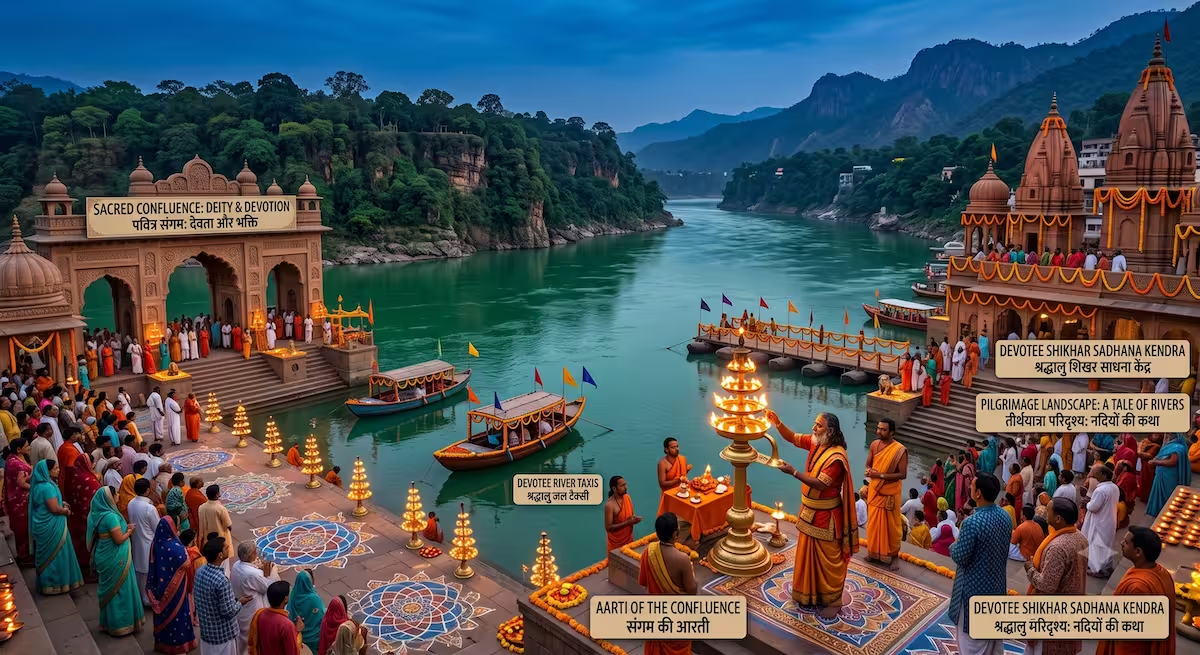
Important Pilgrimage Places Along the Narmada
The Narmada is one of the most revered rivers in India. Its journey from Amarkantak to the Arabian Sea passes through many temples, ashrams, sacred settlements and historic pilgrimage centres.
For centuries, devotees have travelled along the river for worship and pilgrimage. Narmada Parikrama is the best-known pilgrimage tradition associated with the river.
Several places along the Narmada have developed into major religious centres. Amarkantak is associated with the traditional source of the river. Omkareshwar is known for its Jyotirlinga. Maheshwar has historic temples and a celebrated Narmada riverfront.
Further west, places such as Garudeshwar, Chandod, Karnali and Nareshwar form part of the religious landscape of the lower Narmada.
This guide covers the major pilgrimage places separately from the individual ghats along the river.
Why Is the Narmada Important for Pilgrimage?
The Narmada holds a special place in Hindu religious tradition.
Traditional belief regards the river as sacred and associates it with divine origins. Many devotees consider darshan of the Narmada itself spiritually meaningful.
The river is also associated with Narmada Parikrama, a traditional pilgrimage in which devotees travel around the river.
Pilgrims visit temples, ashrams, sacred confluences and riverfront sites along the route.
The pilgrimage centres along the Narmada represent different religious traditions and local histories.
Important Pilgrimage Places Along the Narmada
Amarkantak
Amarkantak is traditionally regarded as the source of the Narmada.
The town lies in the Maikal hills of eastern Madhya Pradesh. Narmada Kund is the central sacred site associated with the river’s origin.
Several temples surround the source area.
Amarkantak is also associated with the origins of other rivers, including the Son.
For Narmada Parikrama pilgrims, Amarkantak has special importance. Many traditional journeys begin or conclude here.
The surrounding forests and hills add a distinct character to the pilgrimage experience.
Bhedaghat
Bhedaghat is one of the most famous Narmada destinations near Jabalpur.
The river flows between tall marble cliffs, creating the landscape known as the Marble Rocks.
Dhuandhar Falls is another major attraction. The Narmada drops over the rocky edge and creates a broad spray that gives the waterfall its name.
Bhedaghat also contains temples and religious sites.
The area is best understood as a combination of natural, cultural and religious importance rather than as a single temple town.
Nemawar
Nemawar is an important pilgrimage centre on the Narmada in Madhya Pradesh.
The town is associated with Siddheshwar Mahadev Temple and traditional Narmada worship.
Pilgrims travelling along the river include Nemawar among their religious stops.
The town is especially relevant to those following traditional Narmada pilgrimage routes through central Madhya Pradesh.
Omkareshwar
Omkareshwar is one of the most important pilgrimage centres on the Narmada.
The town is located around Mandhata Island, which lies within the Narmada River.
Omkareshwar Jyotirlinga is the main religious attraction.
Traditional belief associates the place with Lord Shiva. Devotees visit the temple throughout the year.
The island and surrounding riverfront also contain several temples and sacred sites.
Omkareshwar is an important destination for both temple pilgrims and Narmada Parikrama travellers.
Maheshwar
Maheshwar is a historic pilgrimage and heritage town on the Narmada.
The town is closely associated with Ahilyabai Holkar, who developed Maheshwar as an important centre during her reign.
The Maheshwar Fort overlooks the Narmada. Numerous temples stand along the riverfront.
The town’s stone ghats form one of the most recognisable riverfronts on the Narmada.
Devotees visit Maheshwar for Narmada worship and temple darshan.
The town also attracts visitors interested in its architecture, handloom tradition and history.
Mandleshwar
Mandleshwar is an established religious town on the Narmada in Madhya Pradesh.
The town contains temples and riverfront sites associated with Narmada worship.
It is also connected with traditional pilgrimage routes along the river.
Pilgrims can visit the temples and riverfront before continuing towards other important Narmada destinations.
Garudeshwar
Garudeshwar is an important pilgrimage centre in Gujarat.
The town lies on the Narmada and contains temples, ashrams and religious institutions.
Garudeshwar is also associated with the spiritual tradition surrounding Vasudevanand Saraswati, popularly known as Tembe Swami.
Devotees visit the area for prayer, temple darshan and spiritual activities.
The riverfront adds to the religious character of the settlement.
Chandod
Chandod is an old pilgrimage centre in Gujarat.
The town lies near an important confluence associated with the Narmada and other rivers.
Several temples and sacred sites attract pilgrims to the area.
Chandod has also been associated with traditional rituals performed along the Narmada.
For pilgrims travelling through Gujarat, it forms an important religious stop before the river reaches its lower course.
Karnali
Karnali is a well-known pilgrimage centre on the Narmada in Gujarat.
The Kuber Bhandari Temple is the main religious attraction.
Traditional belief associates Kuber Bhandari with Lord Shiva and Kubera.
Devotees visit the temple throughout the year, with larger gatherings during religious occasions.
The Narmada riverfront forms an important part of the pilgrimage experience at Karnali.
Nareshwar
Nareshwar is a spiritual centre associated with Rang Avadhoot Maharaj.
The town is located on the Narmada in Gujarat and is known for its ashram and religious traditions.
Rang Avadhoot Maharaj played an important role in the modern spiritual history of the area.
Devotees visit Nareshwar for prayer, meditation and darshan.
The centre is particularly associated with the Datta tradition.
Bharuch
Bharuch is one of the oldest historic settlements along the lower Narmada.
The city stands near the Narmada estuary and has had a long connection with river-based trade and settlement.
Bharuch also contains temples and religious sites associated with the Narmada.
For Narmada pilgrims, the city marks the lower section of the river’s journey towards the sea.
Narmada Pilgrimage Places by Region
| Region | Pilgrimage Place | Traditionally Known For |
|---|---|---|
| Upper Narmada | Amarkantak | Traditional source of Narmada |
| Jabalpur region | Bhedaghat | Marble Rocks and Dhuandhar Falls |
| Central Madhya Pradesh | Nemawar | Siddheshwar Mahadev |
| Khandwa region | Omkareshwar | Omkareshwar Jyotirlinga |
| Khargone region | Maheshwar | Temples, fort and Narmada riverfront |
| Khargone region | Mandleshwar | Narmada worship and temples |
| Gujarat | Garudeshwar | Temples, ashrams and spiritual traditions |
| Gujarat | Chandod | Sacred confluence and temples |
| Gujarat | Karnali | Kuber Bhandari Temple |
| Gujarat | Nareshwar | Rang Avadhoot tradition |
| Gujarat | Bharuch | Historic lower Narmada |
Pilgrimage Places Important for Narmada Parikrama
Narmada Parikrama is traditionally undertaken along both banks of the river.
The route passes through many villages, towns, temples, ashrams and sacred sites. Pilgrims may spend different amounts of time at each place.
Some pilgrimage centres have become recognised stops because of their religious importance.
Amarkantak
The traditional source of the Narmada and an important starting point for many Parikrama traditions.
Nemawar
A central Madhya Pradesh pilgrimage stop associated with Siddheshwar Mahadev.
Omkareshwar
A major Shaiva pilgrimage centre and one of the most important temple destinations on the Narmada.
Maheshwar
A historic Narmada town with temples, a fort and an extensive riverfront.
Garudeshwar
A Gujarat pilgrimage centre with temples and spiritual institutions.
Chandod
A traditional pilgrimage destination associated with sacred river confluences and temples.
Karnali
An important temple destination associated with Kuber Bhandari.
Nareshwar
A spiritual centre associated with Rang Avadhoot Maharaj and the Datta tradition.
These places do not represent every stop on a Narmada Parikrama. The traditional route includes many smaller settlements and religious sites between them.
Narmada Pilgrimage Circuit
A broad pilgrimage journey along the Narmada can include several major centres.
| Stage | Pilgrimage Centre | Main Association |
|---|---|---|
| 1 | Amarkantak | Narmada source |
| 2 | Jabalpur and Bhedaghat | Marble Rocks and river temples |
| 3 | Nemawar | Siddheshwar Mahadev |
| 4 | Omkareshwar | Jyotirlinga |
| 5 | Maheshwar | Ahilyabai Holkar and temples |
| 6 | Mandleshwar | Narmada worship |
| 7 | Garudeshwar | Spiritual centres |
| 8 | Chandod | Sacred confluence |
| 9 | Karnali | Kuber Bhandari |
| 10 | Nareshwar | Rang Avadhoot tradition |
| 11 | Bharuch | Lower Narmada |
This is a broad list rather than a fixed Parikrama itinerary.
A traditional Parikrama can take several months on foot. Pilgrims may follow local customs and different stopping patterns.
Religious Traditions at Narmada Pilgrimage Centres
Different pilgrimage centres along the Narmada have developed their own religious traditions.
Shaiva worship has a strong presence at places such as Omkareshwar and Karnali.
The Datta tradition has a strong association with Nareshwar and other parts of the Gujarat Narmada region.
Amarkantak is closely connected with the sacred origin of the Narmada.
Maheshwar combines Narmada worship with a strong temple and royal heritage.
These traditions form part of the wider religious culture of the Narmada basin.
Best Time to Visit Narmada Pilgrimage Places
The cooler months from October to March are generally comfortable for travelling across the Narmada region.
Winter is especially suitable for travellers planning to visit several places during one journey.
Summer can be hot in central and western Madhya Pradesh and Gujarat. Early morning and evening visits are more comfortable during hotter months.
Festival periods can bring large crowds to major temples and pilgrimage centres.
Travellers should check local festival dates before planning accommodation and transport.
How to Travel Between Narmada Pilgrimage Places
Road travel is the most practical option for visiting several Narmada pilgrimage centres.
Amarkantak, Jabalpur, Omkareshwar, Maheshwar and Bharuch have road connections with larger cities and transport hubs.
Travel times vary widely because the pilgrimage route follows a long and winding river course.
A pilgrimage itinerary should therefore allow enough time between destinations.
Those undertaking traditional Narmada Parikrama should follow their chosen tradition rather than treating the journey as a standard tourist circuit.
Frequently Asked Questions About Narmada Pilgrimage Places
Which are the most important pilgrimage places on the Narmada?
Amarkantak, Nemawar, Omkareshwar, Maheshwar, Mandleshwar, Garudeshwar, Chandod, Karnali and Nareshwar are among the important pilgrimage centres along the Narmada.
What is the most sacred place on the Narmada?
Different traditions give importance to different places. Amarkantak is traditionally associated with the source of the Narmada, while Omkareshwar is an important Shaiva pilgrimage centre associated with a Jyotirlinga.
Why is Amarkantak important for Narmada pilgrimage?
Amarkantak is traditionally regarded as the source of the Narmada. The Narmada Kund and surrounding temples form the central sacred area. Many traditional Narmada Parikrama journeys begin or conclude at Amarkantak.
Why is Omkareshwar important?
Omkareshwar is associated with Omkareshwar Jyotirlinga and stands around Mandhata Island in the Narmada. It is one of the major Shaiva pilgrimage destinations along the river.
Why is Maheshwar important in Narmada pilgrimage?
Maheshwar is known for its temples, historic fort and Narmada riverfront. The town is strongly associated with Ahilyabai Holkar and has remained an important centre of Narmada worship.
Which pilgrimage place is associated with Kuber Bhandari?
Karnali in Gujarat is associated with the Kuber Bhandari Temple. The temple attracts devotees who visit the Narmada riverfront as part of their pilgrimage.
Which Narmada pilgrimage centre is associated with Rang Avadhoot Maharaj?
Nareshwar in Gujarat is closely associated with Rang Avadhoot Maharaj. The town contains an important spiritual centre and is linked with the Datta tradition.
Is Bhedaghat a pilgrimage centre?
Bhedaghat is better understood as a major Narmada destination with both natural and religious importance. Its Marble Rocks, Dhuandhar Falls and temples attract pilgrims and other visitors.
Explore the Narmada Pilgrimage Tradition
The Narmada pilgrimage tradition extends beyond individual temples and towns.
The river, its ghats, ashrams, sangams and sacred landscapes all form part of the wider journey.
Continue with our guides to Narmada Parikrama, Narmada Parikrama Route, Narmada Parikrama Rules, Narmada Ghats, Narmada Ashrams and Narmada Sangams to understand the pilgrimage in greater detail.