Gwarighat Jabalpur: History, Narmada Aarti and Religious Significance
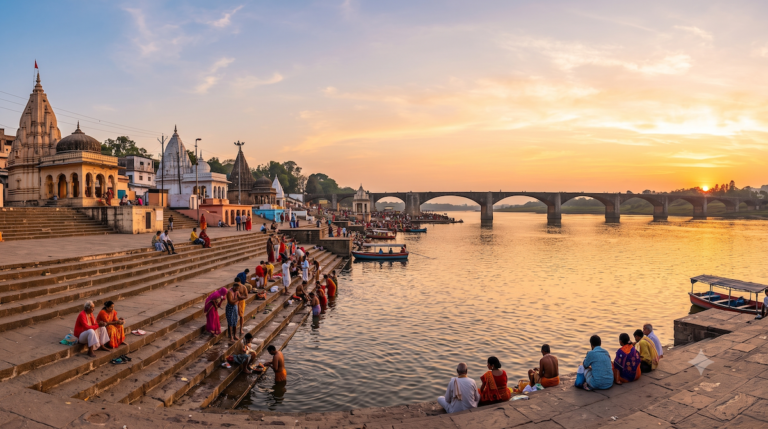
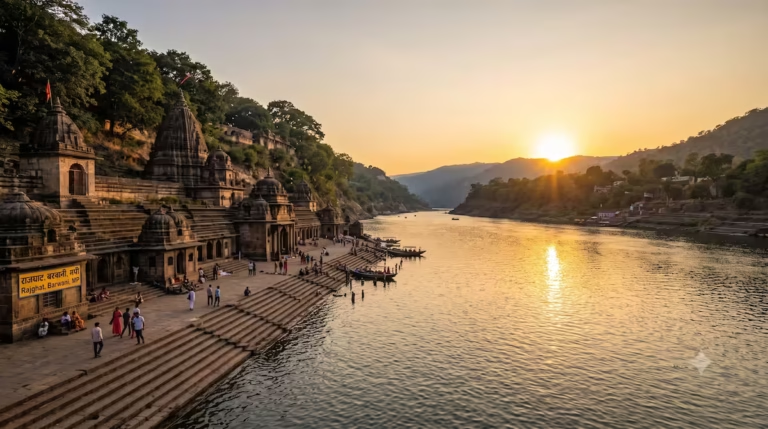
Gwarighat is one of the best-known Narmada riverfronts in Jabalpur, Madhya Pradesh. The ghat attracts devotees for prayer, river worship and the evening Narmada Aarti.
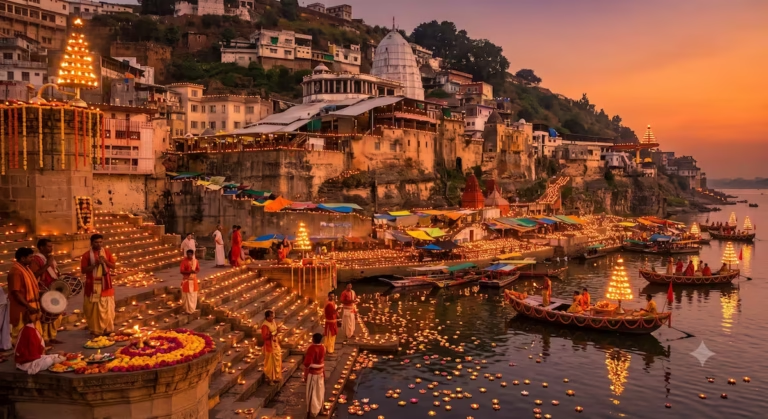
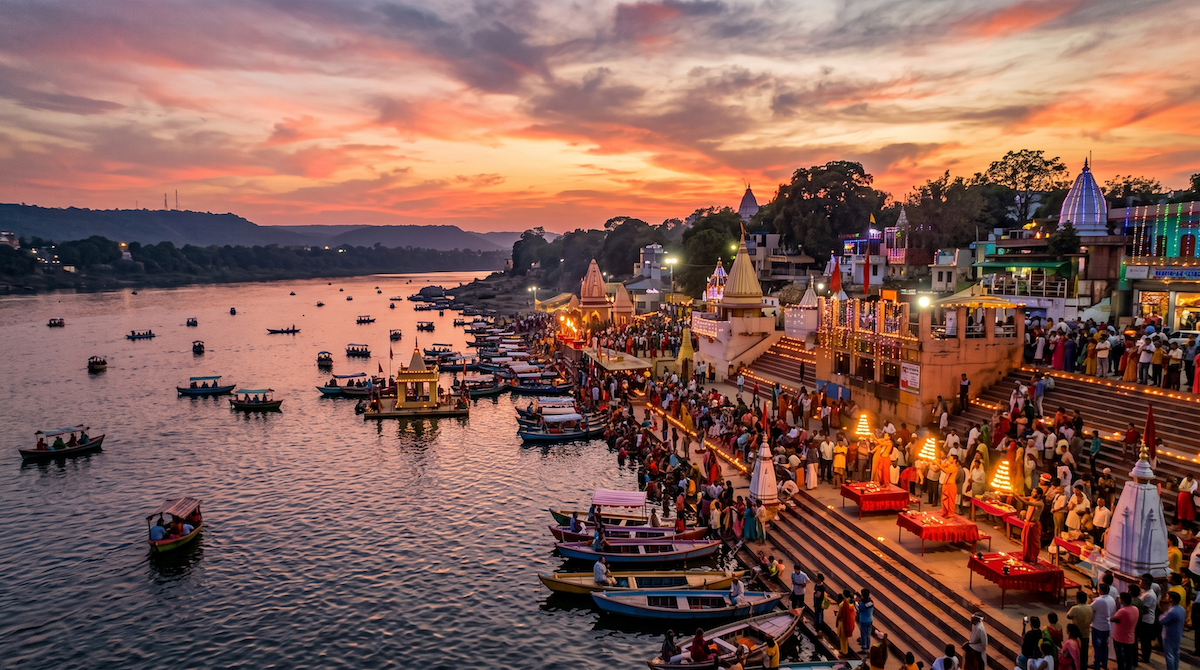
The riverfront becomes especially active around sunset when devotees gather for the Aarti. Lamps, bells and devotional chants create a traditional religious atmosphere.
Gwarighat also has temples and other religious sites nearby. Its location makes it an important place to experience the Narmada’s religious traditions while visiting Jabalpur.
Where Is Gwarighat in Jabalpur?
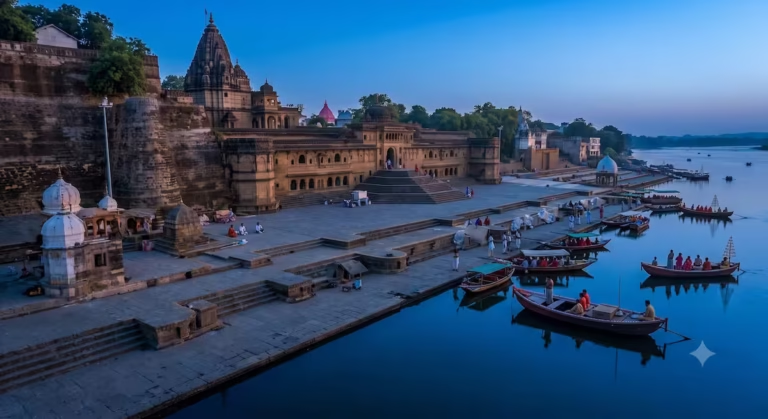
Gwarighat is located on the banks of the Narmada in Jabalpur district.
The ghat lies within Jabalpur city and is accessible by road from different parts of the city. The surrounding area has temples, shrines, shops and facilities for visitors.
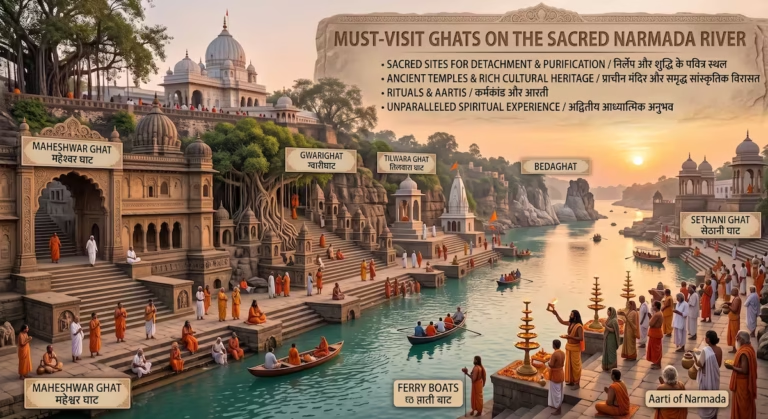
Gwarighat can also be combined with other Narmada sites around Jabalpur, including Tilwara Ghat and Bhedaghat.
History of Gwarighat
Gwarighat has a long association with Narmada worship in the Jabalpur region.
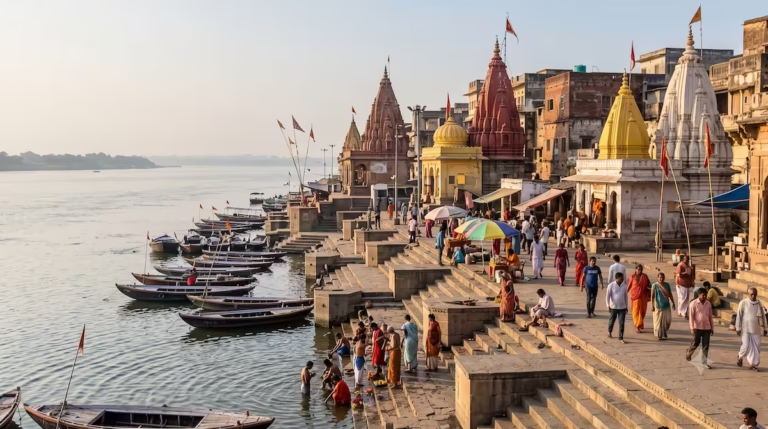
Riverfront locations along the Narmada traditionally served as places for bathing, prayer and religious ceremonies. Gwarighat developed as one such important gathering place.
The wider Jabalpur area has also been associated with temples, saints and different Hindu traditions.
Over time, the riverfront has gained better access and visitor facilities. Its religious role remains closely connected with the Narmada.
Religious Significance of Gwarighat
Traditional Hindu belief regards the Narmada as a sacred river. Gwarighat provides devotees with a place for prayer, meditation, ritual activities and Narmada worship.
Devotees may visit the riverfront to offer prayers, perform rituals or simply spend time beside the river.
The most recognised religious tradition at Gwarighat is the evening Narmada Aarti.
Narmada Aarti at Gwarighat
Narmada Aarti is the main attraction for many visitors to Gwarighat.
The ceremony takes place in the evening, usually around sunset. Priests perform prayers near the river while devotees gather on the steps and surrounding areas.
Traditional lamps, chants and bells form part of the ceremony.
The exact Aarti timing can change with the season and local arrangements. Check the day’s schedule locally before visiting.
What Happens During Narmada Aarti?
Devotees gather near the designated Aarti area before the ceremony begins.
Priests perform prayers using lamps and other traditional ritual items. Chants and bells accompany the ceremony.
Visitors can observe the Aarti from the designated public areas. During busy occasions, the riverfront can become crowded.
If you attend, follow local instructions and avoid blocking the movement of devotees.
Temples and Religious Places Near Gwarighat
Several temples and religious sites are located around Gwarighat.
The Gwarighat Gurudwara is also located in the area and reflects Jabalpur’s wider religious diversity.
Visitors can spend time exploring the surrounding religious sites rather than visiting only for the evening Aarti.
Gwarighat and Narmada Parikrama
Narmada Parikrama is a traditional pilgrimage around the Narmada. Many pilgrims undertake the journey on foot, following the river and visiting sacred places along the way.
Gwarighat lies along the Narmada in the Jabalpur region and can be visited by pilgrims travelling through this section.
It is not a compulsory stop for every Parikrama route. Traditional routes and daily stages can vary.
Narmada Sites Near Gwarighat
Jabalpur offers several places where visitors can experience the Narmada.
Tilwara Ghat
Tilwara Ghat is another historic riverfront on the Narmada near Jabalpur. It can be included with Gwarighat in a river-focused itinerary.
Bhedaghat
Bhedaghat is famous for the Marble Rocks, where the Narmada flows between tall marble cliffs.
Dhuandhar Falls is another major attraction. The area also contains temples and religious sites.
Bargi
Bargi is associated with the Narmada and the large Bargi reservoir. It offers a different setting from Jabalpur’s urban riverfronts.
Best Time to Visit Gwarighat
October to March is generally comfortable for visiting Gwarighat and other outdoor sites around Jabalpur.
Visit in the evening if you want to attend Narmada Aarti. Early morning is better for visitors seeking a quieter riverfront.
Summer afternoons can be hot, so plan outdoor visits around the cooler hours.
Festival days can attract large crowds. Allow extra time for travel and parking during these periods.
How to Reach Gwarighat
Gwarighat is accessible by road from central Jabalpur.
Jabalpur has a railway station and an airport, providing connections with other parts of India.
Local taxis, auto-rickshaws and private vehicles can be used to reach the ghat.
Travel time depends on your starting point, traffic and road conditions.
What to Do at Gwarighat
A visit to Gwarighat can include several simple activities:
- Attend the evening Narmada Aarti
- Offer prayers beside the Narmada
- Visit nearby temples and religious sites
- Spend quiet time at the riverfront
- Observe local religious traditions
- Combine the visit with Tilwara Ghat or Bhedaghat
Respect local customs during religious ceremonies. Follow local rules regarding photography and river access.
Gwarighat Travel Tips
- Keep the visit respectful, especially during Aarti and religious festivals.
- Arrive early if you want a good view of the evening ceremony.
- Carry drinking water during warmer months.
- Keep personal belongings secure when the ghat is crowded.
- Avoid entering the river unless conditions are safe and local guidance permits it.
- Do not leave plastic, food waste or other rubbish near the Narmada.
Frequently Asked Questions About Gwarighat
What is Gwarighat famous for?
Gwarighat is famous for its Narmada riverfront and evening Narmada Aarti. It is also visited for prayer and other religious activities.
Where is Gwarighat located?
Gwarighat is located on the Narmada River in Jabalpur, Madhya Pradesh. It is accessible by road from different parts of the city.
What is the religious significance of Gwarighat?
Traditional belief regards the Narmada as a sacred river. Devotees visit Gwarighat for prayer, rituals and Narmada worship.
What time is Narmada Aarti at Gwarighat?
The Aarti takes place in the evening, generally around sunset. The exact timing varies with the season and local arrangements.
Can tourists attend Narmada Aarti?
Visitors can generally attend the public Aarti at Gwarighat. Arriving early is advisable during weekends, festivals and other busy occasions.
Is Gwarighat part of Narmada Parikrama?
Gwarighat lies along the Narmada in the Jabalpur region and can be visited by Parikrama pilgrims. It is not a compulsory stop on every traditional route.
What places can I visit near Gwarighat?
Tilwara Ghat, Bhedaghat and Bargi are among the Narmada-related places that can be included in a wider Jabalpur itinerary.
Explore More Narmada Guides
Continue exploring the river through our guides to Narmada Ghats, Narmada Pilgrimage Places, Narmada Parikrama Route, Narmada Parikrama Rules, Narmada Ashrams and Narmada Sangams.