Ahilya Ghat Maheshwar: History, Religious Significance and Narmada River
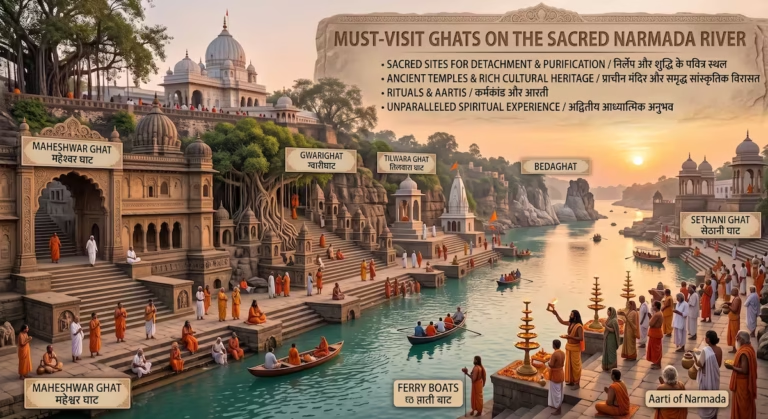
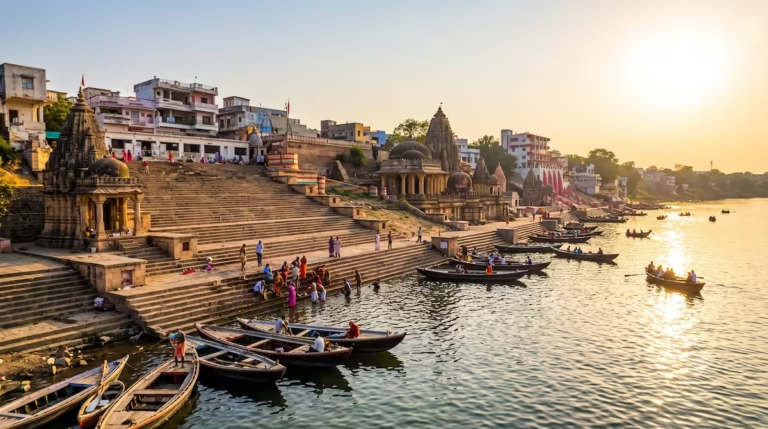
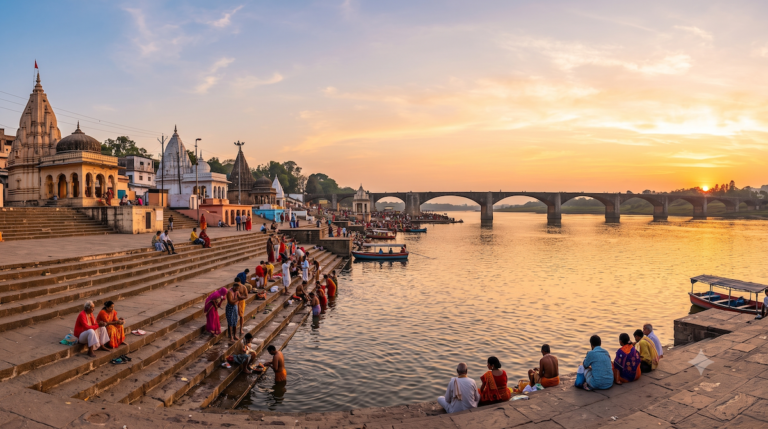
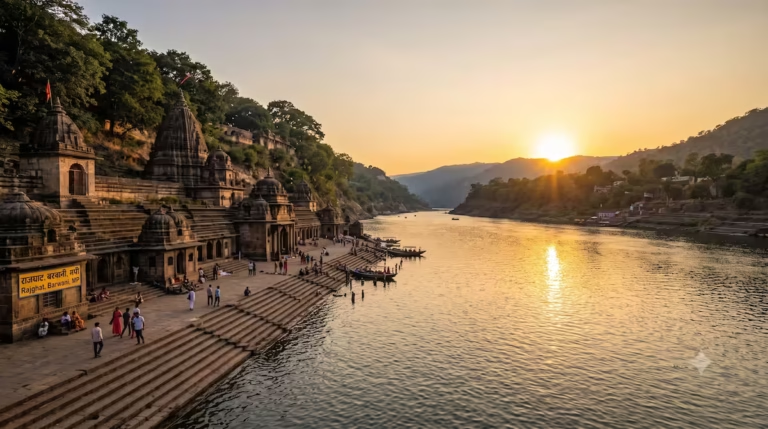
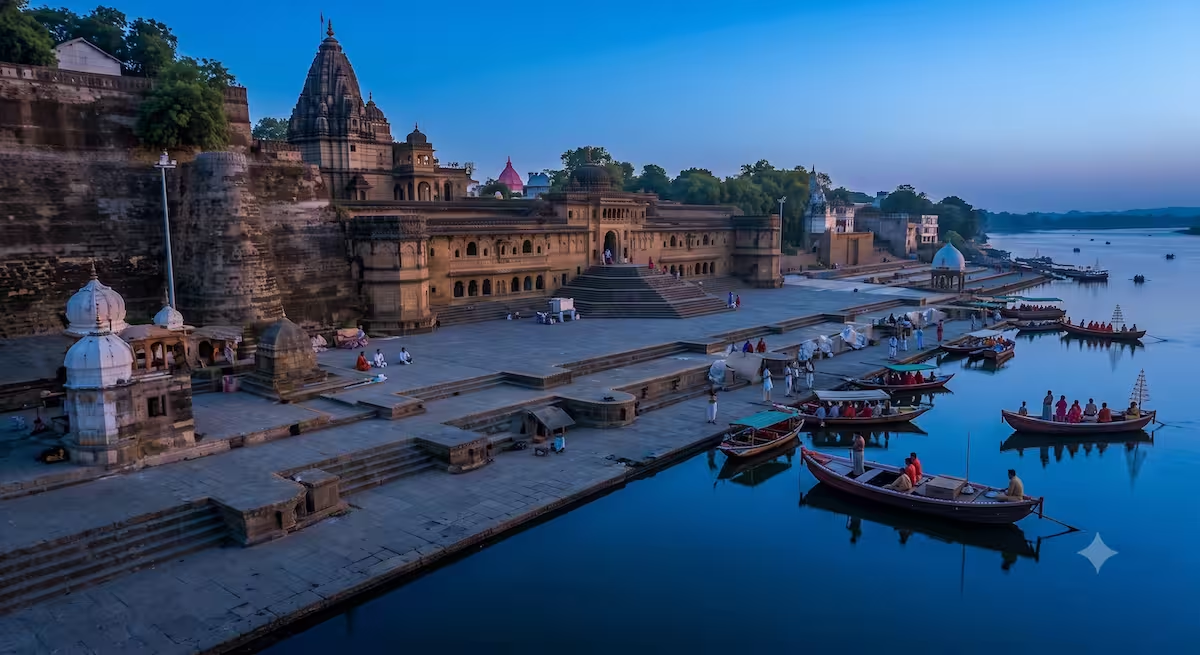
Ahilya Ghat is one of the best-known riverfront ghats in Maheshwar, Madhya Pradesh. The ghat stands along the Narmada below the historic Ahilya Fort and forms an important part of the town’s religious and cultural life.
Maheshwar developed greatly during the rule of Rani Ahilyabai Holkar, who made the town her capital in the 18th century. The ghats, temples and fort complex around the Narmada remain closely connected with this period of the town’s history.
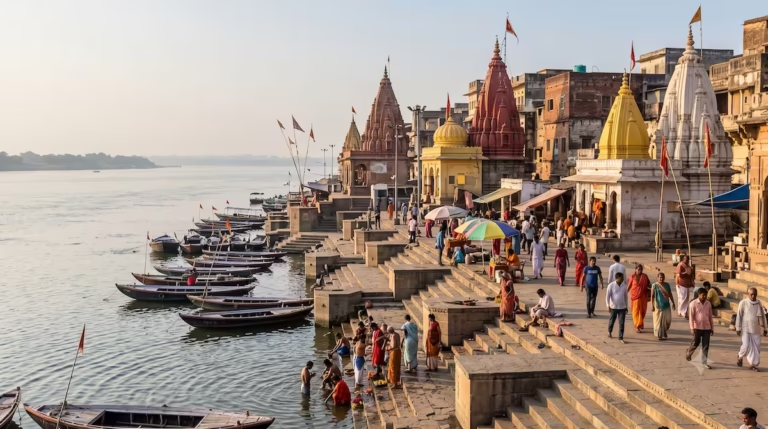
Today, devotees visit Ahilya Ghat for prayer, bathing and Narmada worship. Visitors also come to experience the riverfront, temples and historic architecture around the ghat.
Where Is Ahilya Ghat?
Ahilya Ghat is located on the Narmada River in Maheshwar, Khargone district of Madhya Pradesh. It sits below the Ahilya Fort and forms part of the town’s historic riverfront.
The ghat is one of several ghats along this stretch of the Narmada. Peshwa Ghat and Fanase Ghat are also located along the Maheshwar riverfront.
The compact layout makes it possible to combine a visit to the ghat with nearby temples, the fort and other riverfront sites.
History of Ahilya Ghat
The history of Ahilya Ghat is closely connected with Rani Ahilyabai Holkar and the development of Maheshwar during her reign.
Ahilyabai ruled from 1767 to 1795 and made Maheshwar her capital. During this period, the town gained new temples, ghats and other public structures.
Madhya Pradesh Tourism identifies the Narmada ghats at Maheshwar, including Ahilya Ghat, as part of the riverfront developed during this period. The ghats descend from the historic town toward the river.
The stone steps, temples and fort walls together form the historic character of the Maheshwar riverfront.
Religious Significance of Ahilya Ghat
Traditional Hindu belief regards the Narmada as a sacred river. Ahilya Ghat provides a place where devotees can pray, bathe and perform traditional religious activities beside the river.
Pilgrims may visit the ghat before or after visiting temples around Maheshwar. The riverfront is also used for meditation and quiet prayer.
The religious atmosphere becomes more noticeable during festivals and other auspicious occasions. Visitors should respect people performing rituals and follow local customs.
Ahilya Ghat and Narmada Worship
Narmada worship forms an important part of Maheshwar’s religious traditions.
Devotees visit the river during the morning and evening. Some perform ritual bathing, while others offer prayers or spend time beside the water.
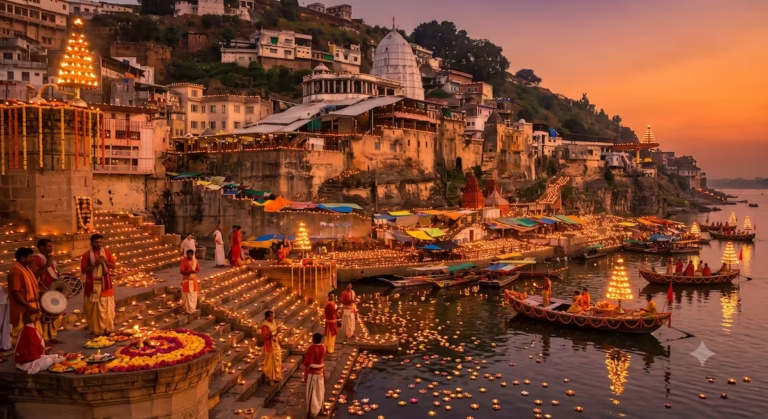
The evening riverfront can become especially active, with devotees gathering around the ghats and nearby temples. Madhya Pradesh Tourism also describes the Maheshwar ghats as places where pilgrims and holy men gather beside the Narmada.
Visitors should remember that Ahilya Ghat remains an active religious space rather than simply a heritage attraction.
Ahilya Ghat and Ahilyabai Holkar
Ahilya Ghat is closely associated with the legacy of Rani Ahilyabai Holkar.
Ahilyabai made Maheshwar her capital and supported the construction and restoration of temples, ghats, wells and other public facilities. Her work helped shape the historic riverfront that visitors see today.
The Ahilya Fort stands directly above the Narmada and provides an important historical setting for the ghat. The fort was reconstructed under Ahilyabai and overlooks the river from the town’s elevated edge.
Her association with Maheshwar remains visible throughout the town.
Ahilya Ghat and Narmada Parikrama
Narmada Parikrama is a traditional pilgrimage around the Narmada. Pilgrims follow the river while visiting temples, ghats, ashrams and other sacred places.
Maheshwar is an important pilgrimage town along the Narmada. Pilgrims travelling through this section can visit Ahilya Ghat along with the town’s temples and other riverfront locations.
Ahilya Ghat is not a compulsory stop on every Narmada Parikrama route. Traditional routes can differ according to the pilgrim’s chosen path and customs.
Places to Visit Near Ahilya Ghat
Ahilya Fort and Palace
The historic fort overlooks the Narmada and forms the backdrop to the Maheshwar riverfront. The complex contains the Rajwada and other heritage structures.
Ahilyabai Temple
The temple is located within the historic area around the fort and riverfront. It can be included during a walking visit to Maheshwar.
Baneshwar Temple
Baneshwar Temple is another religious site associated with the Maheshwar area and can be included in a wider pilgrimage visit.
Maheshwari Weaving Centres
Maheshwar is also known for its handwoven Maheshwari textiles. The weaving tradition received strong support during Ahilyabai Holkar’s period.
Best Time to Visit Ahilya Ghat
October to March is generally comfortable for visiting Maheshwar and spending time along the riverfront.
Early morning is suitable for visitors who want cooler weather and a quieter atmosphere. Evening is another good time to visit the ghats and observe local religious activities.
Summer afternoons can become very hot. Plan outdoor activities during the cooler hours and carry drinking water.
Festival periods can attract larger crowds. Allow additional time for local travel and parking.
How to Reach Ahilya Ghat
Ahilya Ghat is located within Maheshwar and can be reached by road through the town.
Indore is the nearest major airport and provides the main air connection for visitors travelling to Maheshwar. Maheshwar is connected by road with Indore and other towns in Madhya Pradesh.
Once in Maheshwar, the historic riverfront area is best explored on foot.
What to Do at Ahilya Ghat
- Spend time beside the Narmada
- Offer prayers according to local tradition
- Observe Narmada worship
- Visit the Ahilya Fort and nearby temples
- Walk along the historic riverfront
- Learn about Ahilyabai Holkar’s connection with Maheshwar
- Include the ghat in a Narmada pilgrimage itinerary
Respect religious ceremonies and avoid disturbing devotees. Follow local instructions regarding photography, bathing and river access.
Ahilya Ghat Travel Tips
Visit early morning or evening during warmer months.
Wear comfortable footwear because the riverfront includes many steps.
Carry drinking water during summer.
Keep personal belongings secure in crowded areas.
Avoid entering the Narmada when water conditions are unsafe.
Keep plastic and other waste away from the river.
Dress respectfully when visiting nearby temples and religious places.
FAQs About Ahilya Ghat
Where is Ahilya Ghat located?
Ahilya Ghat is located on the Narmada River in Maheshwar, Madhya Pradesh. It lies below the historic Ahilya Fort.
What is Ahilya Ghat famous for?
Ahilya Ghat is known for its Narmada riverfront, religious activities and connection with the historic development of Maheshwar under Rani Ahilyabai Holkar.
Who built the ghats at Maheshwar?
The development of Maheshwar’s ghats is closely associated with Rani Ahilyabai Holkar’s rule. Historical tourism sources identify her period as an important phase in the development of the town’s temples and riverfront structures.
What is the religious significance of Ahilya Ghat?
Traditional Hindu belief considers the Narmada sacred. Devotees visit Ahilya Ghat for prayer, bathing, rituals and Narmada worship.
Is Ahilya Ghat part of Narmada Parikrama?
Maheshwar is located along the Narmada and can be visited by Parikrama pilgrims. Ahilya Ghat may form part of their visit, but it is not a compulsory stop on every traditional route.
What can I visit near Ahilya Ghat?
Visitors can combine Ahilya Ghat with Ahilya Fort, nearby temples, other Maheshwar ghats and local weaving centres.
Explore More Narmada Guides
Continue your journey with our guides to Narmada Ghats, Narmada Pilgrimage Places, Narmada Parikrama Route, Narmada Parikrama Rules, Narmada Ashrams and Narmada Sangams.